
 Hassan malik

Cryptocurrency has changed the way people think about money, digital Crypto for Beginners ownership, and financial technology. From Bitcoin and Ethereum to thousands of other digital assets, cryptocurrency has developed into a major part of the modern digital economy. However, entering the crypto world can feel confusing because beginners are introduced to unfamiliar terms such as blockchain technology, digital wallets, private keys, decentralized finance, crypto exchanges, and smart contracts.
This guide to Crypto for Beginners explains the fundamentals in simple language. You do not need advanced technical knowledge to understand how cryptocurrency works. The goal is to build a strong foundation so that you can understand the technology, recognize important risks, and make informed decisions when researching digital assets.
Unlike traditional currencies that are generally issued and managed through central financial institutions, many cryptocurrencies operate using decentralized networks. Transactions can be recorded on a blockchain, where network participants help verify and maintain the system. This technology creates new possibilities for payments, applications, investment products, and digital ownership.
For anyone researching cryptocurrency for beginners, the most important first step is education. Crypto prices can change rapidly, scams exist, and losing access to a wallet can result in permanent loss of funds. Understanding the basics before using an exchange or purchasing a digital asset can help you navigate this rapidly changing industry more responsibly.
What Is Cryptocurrency?
Cryptocurrency is a form of digital asset designed to operate electronically. Unlike physical cash, cryptocurrencies exist digitally and can be transferred between compatible addresses through a blockchain or another distributed ledger system.
The word cryptocurrency comes from the use of cryptographic techniques to secure transactions and control certain functions within a digital network. Depending on the cryptocurrency, the network may use different consensus mechanisms to verify transactions and maintain agreement between participants.
Bitcoin was the first widely adopted cryptocurrency and remains one of the most recognized digital assets. Ethereum introduced another important concept by allowing developers to build decentralized applications and smart contracts on its blockchain.
For crypto beginners, it is useful to understand that cryptocurrencies are not all designed for exactly the same purpose. Some focus primarily on digital payments, while others support applications, tokenized assets, decentralized finance, gaming ecosystems, or other digital services.
Blockchain Technology

How Does a Blockchain Work?
A blockchain is a type of distributed ledger that records transactions across a network of computers. Instead of relying on one central database, information can be maintained by multiple participating computers according to the rules of a particular blockchain.
Transactions are grouped into blocks and added to the chain according to the network’s consensus process. Once information has been confirmed and recorded, changing historical records can be difficult because the network is designed to maintain consistency between participants.
For beginners, the easiest way to think about blockchain technology is as a shared digital record. When cryptocurrency is transferred, the transaction is recorded according to the rules of the network. The blockchain provides the underlying infrastructure that allows many cryptocurrencies to function.
Why Is Blockchain Important?
Blockchain technology has applications beyond cryptocurrency. Developers can use blockchain networks to create smart contracts, decentralized applications, tokenized assets, and other digital systems.
This broader technology is one reason the cryptocurrency industry attracts attention from developers, businesses, researchers, and financial institutions. However, the usefulness of blockchain technology and the value of a particular cryptocurrency are separate questions. A useful technology does not automatically mean every related digital asset will increase in value.
Bitcoin Explained for Beginners
Bitcoin is the first cryptocurrency to achieve broad global recognition. It was introduced in 2009 under the pseudonym Satoshi Nakamoto and was designed as a peer-to-peer electronic cash system.
Bitcoin operates without a conventional central bank controlling its network. Transactions are validated through the Bitcoin network, while new coins are created according to predetermined protocol rules.
For people learning Crypto for Beginners, Bitcoin is often the best starting point because many concepts in cryptocurrency can be understood through its example. Bitcoin uses blockchain technology, cryptographic security, digital addresses, private keys, and a decentralized network.
Bitcoin’s limited maximum supply is also an important part of its design. The protocol specifies that no more than 21 million bitcoins will ultimately exist. This scarcity is one factor frequently discussed when people analyze Bitcoin’s economic characteristics.
Ethereum and Smart Contracts
What Makes Ethereum Different?
Ethereum is another major blockchain ecosystem, but its purpose extends beyond transferring digital currency. Ethereum supports programmable smart contracts, which allow developers to create applications that operate according to coded rules.
A smart contract is essentially software deployed on a blockchain. When predefined conditions are met, the contract can execute programmed actions without requiring a traditional intermediary for every operation.
Ethereum has played a major role in the development of decentralized applications, DeFi, and token ecosystems. Its native cryptocurrency, Ether or ETH, is used within the Ethereum network for transactions and network-related operations.
Understanding Ethereum is valuable for crypto beginners because it demonstrates how blockchain networks can become programmable platforms rather than simply digital payment systems.
What Are Crypto Wallets?
A cryptocurrency wallet is a tool that allows users to manage their digital assets and interact with blockchain networks. Wallets do not simply store cryptocurrency in the same way a physical wallet stores cash. Instead, they manage cryptographic keys that allow users to authorize transactions involving blockchain addresses.
There are several types of wallets, including software wallets, hardware wallets, and other forms of key-management systems.
A software wallet can be accessed through applications or browser interfaces, while a hardware wallet is a dedicated physical device designed to keep private keys more isolated from online environments.
For crypto beginners, learning about wallets is essential because security depends heavily on protecting private information.
Public Keys, Private Keys, and Seed Phrases
A public address can generally be shared with someone who wants to send cryptocurrency to you. A private key, however, is highly sensitive because it can provide authorization to move assets associated with the relevant blockchain address.
Many wallets also provide a recovery phrase, sometimes called a seed phrase. This phrase can be used to restore access to a wallet under supported conditions.
Beginners should understand that anyone who obtains a wallet’s sensitive recovery information may potentially gain control over the associated assets. For this reason, seed phrases should not be casually shared, uploaded to websites, or entered into unknown applications.
Good crypto security practices are just as important as understanding prices and market trends.
What Are Crypto Exchanges?
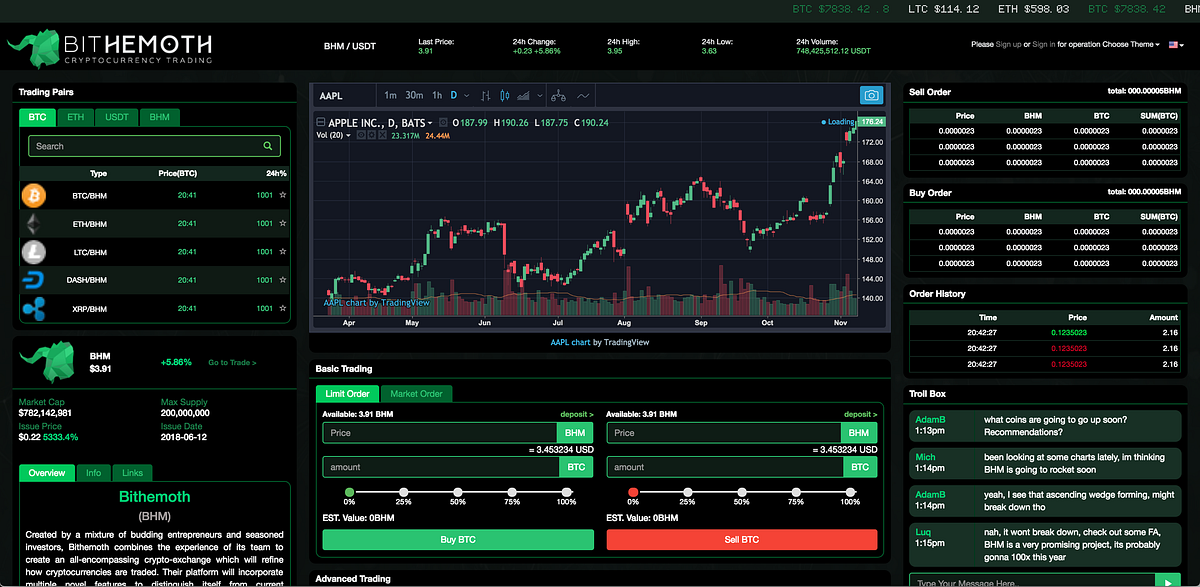
A cryptocurrency exchange is a platform where users can buy, sell, or trade supported digital assets. Depending on the platform and jurisdiction, an exchange may provide services such as spot trading, deposits, withdrawals, and other financial products.
Centralized exchanges generally operate through a company or organization that manages the platform and provides account infrastructure. Decentralized exchanges, by contrast, can allow users to interact with smart contracts and trade certain assets without relying on the same centralized order-book structure.
When researching an exchange, beginners should examine factors such as security practices, supported assets, fees, withdrawal rules, regulatory status where applicable, and the availability of appropriate account protections.
How to Buy Cryptocurrency
The basic process of purchasing cryptocurrency usually involves selecting a compatible platform, creating an account where required, completing applicable verification, funding the account, and purchasing a supported digital asset.
However, the technical process is only one part of learning Crypto for Beginners. New users should also understand transaction fees, price volatility, withdrawal procedures, and wallet security.
It is important to distinguish between learning how to purchase cryptocurrency and deciding whether a particular asset is suitable for an individual’s circumstances. Research should come before financial commitment.
Beginners can start by studying how transactions work, reading project documentation, comparing different blockchain networks, and understanding the risks associated with digital assets.
Crypto Prices and Market Volatility
Cryptocurrency prices can move significantly over relatively short periods. Market prices are influenced by factors including supply and demand, market sentiment, liquidity, technological developments, regulatory announcements, macroeconomic conditions, and broader financial-market trends.
A cryptocurrency’s price should not be viewed in isolation. Market capitalization, circulating supply, trading volume, liquidity, token economics, and network activity can provide additional context.
For example, two cryptocurrencies may have very different prices per coin but completely different supplies and market capitalizations. Therefore, a lower coin price does not automatically mean an asset is cheaper or has greater potential.
This is an important lesson in crypto market analysis for beginners.
What Are Altcoins?
The term altcoin generally refers to cryptocurrencies other than Bitcoin. The category includes a wide variety of projects with different technical designs and purposes.
Some altcoins are associated with smart-contract platforms, while others focus on payments, decentralized applications, privacy features, gaming, infrastructure, or specialized blockchain services.
Beginners should avoid assuming that all altcoins work in the same way. Before researching an altcoin, it can be useful to understand its purpose, technology, supply structure, development activity, ecosystem, and market conditions.
Altcoin analysis, therefore, involves more than simply looking at a price chart.
Decentralized Finance
Decentralized finance, commonly called DeFi, refers to financial applications built using blockchain networks and smart contracts.
DeFi platforms can provide functions associated with financial services, including decentralized trading, lending, borrowing, and liquidity mechanisms. These systems can operate through programmable contracts rather than traditional centralized institutions.
However, DeFi introduces additional risks. Smart-contract vulnerabilities, liquidity problems, market volatility, scams, and user-interface risks can all affect participants.
For crypto beginners, DeFi should be studied carefully rather than treated as an easy way to generate income.
Crypto Investing and Trading Are Different
Investing and trading are often discussed together, but they represent different approaches.
Trading generally involves attempting to benefit from shorter-term price movements. Traders may use technical analysis, market data, order books, and other tools.
Investing can involve holding an asset for a longer period based on a thesis about its technology, adoption, ecosystem, or economic characteristics.
Neither approach eliminates risk. Cryptocurrency markets can move quickly, and historical performance does not guarantee future results.
A beginner should first understand the difference between crypto trading, long-term holding, market analysis, and speculation before choosing how to participate.
Common Crypto Risks for Beginners
Market Volatility
Volatility is one of the most visible risks in cryptocurrency. Prices can rise or fall rapidly, and large price movements can occur even when an investor’s expectations have not changed.
Beginners should understand that cryptocurrency is not equivalent to a guaranteed savings product. The possibility of significant gains exists alongside the possibility of significant losses.
Scams and Fraud
The cryptocurrency industry has attracted scammers because digital assets can be transferred quickly and transactions may be difficult or impossible to reverse.
Common scams can include fake investment opportunities, phishing websites, fraudulent tokens, impersonation accounts, giveaway scams, and fake customer-support messages.
Learning to identify suspicious promises is an essential part of crypto security for beginners. Claims of guaranteed profits or risk-free returns should receive particular scrutiny.
Private-Key Loss
Crypto users can face another unusual risk: losing access to their own wallet.
If a user loses important recovery information and there is no supported recovery mechanism, access to assets may become impossible. This makes secure backup practices extremely important.
Regulatory Risk
Cryptocurrency regulations can differ significantly between countries and can change over time. Rules may affect exchanges, taxation, stablecoins, token offerings, financial products, and other aspects of the industry.
Beginners should check the rules that apply in their own jurisdiction and avoid assuming that regulations in another country apply to them.
Stablecoins Explained
Stablecoins are digital assets designed to maintain a relatively stable value, often by referencing a currency or another asset.
They are commonly used within cryptocurrency markets because they can provide a blockchain-based representation of value that is intended to have less price volatility than assets such as Bitcoin.
However, stablecoins are not automatically risk-free. Their stability mechanisms, reserves, issuer structures, collateral arrangements, and redemption processes can differ.
For beginners, understanding stablecoins helps explain why they are widely used in cryptocurrency trading and decentralized applications.
Crypto Security Best Practices
Security should be treated as a fundamental part of learning cryptocurrency.
Users should protect passwords, private keys, and recovery phrases. Strong account security can include unique passwords and available multi-factor authentication. Hardware wallets may be considered for users who want an additional layer of protection for certain holdings.
Beginners should also verify website addresses before entering credentials or connecting wallets. Suspicious links, unsolicited messages, unrealistic investment promises, and requests for recovery phrases should be treated carefully.
One of the most important principles is simple: legitimate support staff should not normally need your private wallet recovery phrase to provide ordinary assistance.
How Beginners Can Research a Cryptocurrency

Research should go beyond social-media posts and short-term price movements. Start by examining the project’s official documentation and understanding what problem it claims to solve.
Next, study the blockchain’s technology, token supply, distribution model, development activity, ecosystem, and actual usage. Look at whether the project has functioning products or applications rather than relying solely on promotional claims.
It can also be useful to compare information from multiple independent sources. Crypto research, fundamental analysis, and technical analysis each provide different types of information.
The more a beginner understands how a project works, the easier it becomes to separate technological facts from marketing language.
Common Mistakes Crypto Beginners Make
One common mistake is buying an asset simply because its price has recently increased. Past price movement does not guarantee future performance.
Another mistake is putting money into a project without understanding what the asset actually does. A popular name or large online following does not replace research.
Beginners may also underestimate security risks. Sharing recovery phrases, clicking suspicious links, or connecting a wallet to an unknown application can expose digital assets to serious threats.
A further mistake is using money needed for essential expenses. Cryptocurrency markets can be volatile, so financial decisions should take personal circumstances and risk tolerance into account.
The Future of Cryptocurrency
The future of cryptocurrency remains an evolving subject. Blockchain networks continue to develop, while businesses, developers, financial institutions, and governments explore different applications of digital assets and distributed ledger technology.
Areas such as tokenization, stablecoins, decentralized applications, blockchain infrastructure, digital identity, and decentralized finance continue to receive attention.
At the same time, challenges remain. Scalability, security, regulation, user experience, energy considerations for certain networks, and sustainable adoption are ongoing areas of discussion.
For crypto beginners, the most useful approach is to focus on understanding these developments rather than attempting to predict exactly how the entire industry will evolve.
Final Thoughts on Crypto for Beginners
Learning cryptocurrency does not need to happen all at once. A strong foundation begins with understanding blockchain technology, Bitcoin, Ethereum, wallets, private keys, exchanges, crypto prices, stablecoins, altcoins, and security.
The central lesson for Crypto for Beginners is that knowledge should come before action. Cryptocurrency combines innovative technology with financial risk, and understanding both sides is essential.
As you continue learning, explore reliable information, compare multiple sources, understand the technology behind individual projects, and pay close attention to security. Crypto is a broad ecosystem rather than a single product, and each blockchain or digital asset can have different characteristics.
With a solid understanding of cryptocurrency basics, blockchain technology, crypto wallets, digital assets, and market volatility, beginners can approach the industry with greater awareness and a clearer understanding of how the technology works.
Frequently Asked Questions
What is cryptocurrency for beginners?
Cryptocurrency is a type of digital asset that can operate through blockchain or distributed ledger technology. Bitcoin is the most widely recognized example, while thousands of other digital assets exist with different purposes.
How does cryptocurrency work?
Cryptocurrency networks use blockchain or related distributed ledger systems to record transactions. Depending on the network, participants use a consensus mechanism to verify transactions and maintain agreement about the state of the ledger.
Is cryptocurrency safe for beginners?
Cryptocurrency involves significant risks, including price volatility, scams, hacking, private-key loss, and regulatory uncertainty. Learning about security and researching an asset before using it are important steps for beginners.
What is a crypto wallet?
A crypto wallet is a tool used to manage cryptographic keys and interact with blockchain networks. Wallets can include software-based and hardware-based solutions, depending on the user’s needs.
What should I learn first about crypto?
Start with the fundamentals: blockchain technology, Bitcoin, Ethereum, Crypto for Beginners wallets, private keys, exchanges, transaction fees, market volatility, scams, and basic security. Building this foundation can make more advanced cryptocurrency topics easier to understand.