
 Hassan malik
The cryptocurrency industry has grown from a relatively small digital experiment into a global market containing thousands of digital assets, blockchain networks, financial applications, and trading services. At the center of this ecosystem are Crypto Exchange Platforms, which provide infrastructure for buying, selling, and trading cryptocurrencies such as Bitcoin, Ethereum, stablecoins, and altcoins.
For beginners, choosing and understanding an exchange can seem complicated. Different platforms offer different cryptocurrencies, trading tools, fee structures, security features, withdrawal methods, and account requirements. Some exchanges are centralized and operated by companies, while decentralized exchanges allow users to trade directly through blockchain-based smart contracts.
Understanding how Crypto Exchange Platforms work is therefore an important step for anyone entering the cryptocurrency market. An exchange can provide access to digital assets, but users also need to understand the risks associated with market volatility, account security, custody, liquidity, transaction fees, and cryptocurrency regulations.
This guide explains the fundamentals of Crypto Exchange Platforms, how they operate, the different types of exchanges, important features, trading methods, fees, security practices, and the factors beginners should consider when researching an exchange.
What Are Crypto Exchange Platforms?
Crypto Exchange Platforms are online services that allow users to buy, sell, exchange, or trade cryptocurrencies.
Depending on the platform, users may be able to trade Bitcoin, Ethereum, stablecoins, and a wide range of altcoins. Some platforms provide simple interfaces for beginners, while others offer advanced charts, technical indicators, derivatives, automated trading tools, and professional order-management systems.
An exchange essentially provides a marketplace where buyers and sellers can interact.
On a centralized exchange, the company operating the platform manages much of the trading infrastructure. On a decentralized exchange, blockchain smart contracts can facilitate transactions directly between users.
The specific services available depend on the platform, country, regulatory environment, and supported blockchain networks.
How Crypto Exchange Platforms Work
When users trade through a cryptocurrency exchange, the platform processes orders according to its particular trading system.
On a centralized platform, users typically create an account, deposit funds, and place orders through the exchange’s interface. The exchange matches compatible buy and sell orders.
For example, if a trader wants to buy Bitcoin at a particular price, the platform may match that order with a seller offering Bitcoin at a compatible price.
Decentralized exchanges operate differently. Users generally connect a compatible wallet and interact with smart contracts that facilitate token swaps according to the protocol’s design.
Understanding this difference is important because it affects custody, transaction processing, fees, and user responsibilities.
Centralized Crypto Exchanges
Centralized exchanges, commonly called CEXs, are operated by companies or organizations.
Users generally create accounts and interact with the platform through a website or mobile application.
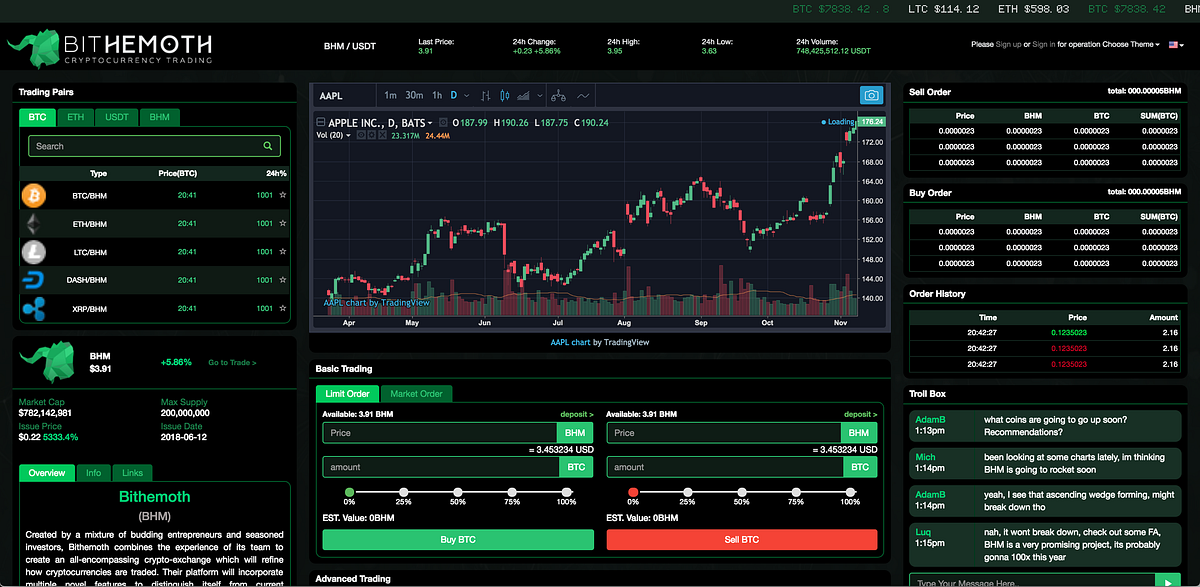
Centralized platforms can offer features such as spot trading, market charts, order books, deposits, withdrawals, and sometimes staking or derivatives.
One major characteristic of centralized exchanges is that users may not directly control the private keys associated with assets held on the platform.
This creates a different risk model from using a personal cryptocurrency wallet.
Decentralized Crypto Exchanges
Decentralized exchanges, or DEXs, use blockchain technology and smart contracts to facilitate cryptocurrency trading.
Instead of depositing assets into a traditional exchange account, users commonly connect their own blockchain wallet to the decentralized application.
Many DEXs use liquidity pools and automated market-making systems rather than conventional centralized order books.
DEXs can provide direct wallet-based trading, but users must take greater responsibility for transaction approvals, wallet security, network selection, and smart-contract interactions.
Crypto Exchange Platforms for Beginners
For beginners, a cryptocurrency exchange can provide a relatively straightforward way to access digital assets.
A new user may need to create an account, complete any required identity verification, add an accepted payment method, purchase cryptocurrency, and decide whether to keep the assets on the platform or transfer them to a personal wallet.
The exact process varies between exchanges and jurisdictions.
Beginners should understand the platform’s fees, withdrawal rules, security features, supported assets, and local availability before depositing funds.
Bitcoin Trading on Crypto Exchanges
Bitcoin trading is one of the most common activities on cryptocurrency exchanges.
Users can trade Bitcoin against currencies or other digital assets depending on the available trading pairs.
Common market concepts include BTC/USD, BTC/USDT, and BTC/ETH, although available pairs vary by platform.
Bitcoin’s high market activity makes it a major asset on many exchange platforms.
However, Bitcoin remains volatile, and its price can change significantly during periods of increased market activity.
Ethereum Trading Platforms
Ethereum is another major cryptocurrency available across many exchange platforms.
Users can trade ETH against stablecoins, fiat currencies, Bitcoin, and other digital assets depending on the exchange.
Ethereum trading can involve spot markets as well as other financial products.
Users should understand the difference between buying ETH directly and using leveraged or derivative products, because the latter can introduce substantially different risks.
Altcoin Trading on Exchanges
Many Crypto Exchange Platforms support a large number of altcoins.
Altcoins can include Layer 1 tokens, DeFi tokens, gaming assets, AI-related cryptocurrencies, infrastructure projects, and many other digital assets.
However, availability does not necessarily mean that every token has the same liquidity or market depth.
Smaller altcoins can experience wider spreads and larger price movements than highly liquid assets such as Bitcoin.
Traders should therefore consider trading volume and liquidity when evaluating an altcoin market.
Crypto Trading Pairs
A trading pair represents two assets that can be traded against each other.
For example, an exchange may offer BTC/USDT, meaning Bitcoin can be traded against a USDT-denominated market.
Trading pairs allow users to compare the value of one asset against another.
The number of available trading pairs can differ substantially between Crypto Exchange Platforms.
A platform with a large number of assets may offer hundreds or thousands of possible combinations, while another platform may focus on a smaller selection.
Spot Trading
Spot trading involves buying or selling an asset at the current market price or at a specified price through an available order.
When a user purchases Bitcoin through a spot market, the trade represents an exchange of one asset for another.
Spot trading is generally easier for beginners to understand than leveraged derivatives.
However, spot cryptocurrency markets can still involve significant volatility and the possibility of loss.
Market Orders
A market order is designed to execute quickly at the best available prices in the current market.
Market orders can be useful when execution speed is more important than obtaining an exact price.
However, the final execution price can differ from the price visible when the order is submitted, particularly in markets with lower liquidity or during periods of rapid volatility.
Limit Orders
A limit order allows traders to specify the price at which they are willing to buy or sell.
For example, a user may want to purchase an asset only if it reaches a particular price.
The order will generally execute only if the market reaches the specified conditions and sufficient liquidity is available.
Limit orders provide greater price control than market orders, but they do not guarantee execution.
Crypto Exchange Fees
Crypto exchange fees vary between platforms.
Common fees can include trading fees, withdrawal fees, deposit fees, conversion fees, network fees, and other service charges.
Some exchanges use different fee levels depending on trading volume or whether an order adds or removes liquidity from the market.
Before using an exchange, users should review its current fee schedule carefully.
A platform with low trading fees may have other costs, such as withdrawal charges or conversion spreads.
Exchange Liquidity
Liquidity refers to how easily an asset can be bought or sold without significantly affecting its market price.
Highly liquid cryptocurrency markets generally have more buyers and sellers.
Lower-liquidity markets can experience wider spreads and greater price impact.
Liquidity is especially important when trading smaller altcoins.
Users should examine trading volume, order-book depth, and spreads rather than judging an exchange solely by the number of listed cryptocurrencies.
Trading Volume
Trading volume measures the amount of an asset traded during a specific period.
High trading volume can indicate substantial market activity.
However, reported volume should be interpreted carefully because different platforms use different methodologies and market structures.
Volume is most useful when considered alongside liquidity, spreads, order-book depth, and overall market conditions.
Crypto Exchange Security
Crypto exchange security is one of the most important considerations for users.
Exchanges can hold large amounts of digital assets, making them targets for cyberattacks and fraud.
Users should examine whether a platform provides features such as multi-factor authentication, withdrawal protections, device management, security notifications, and account controls.
Strong personal security practices are also important.
Users should never share passwords, authentication codes, private keys, or wallet recovery phrases with strangers.
Two-Factor Authentication
Two-factor authentication, often called 2FA, adds an additional verification layer to an account.
Instead of relying only on a password, the user may need a separate authentication code or security device.
Enabling 2FA can help reduce the risk of unauthorized account access if a password becomes compromised.
Users should also secure the email account connected to their exchange account because email access can sometimes be used to reset account credentials.
Custodial vs Non-Custodial Crypto

The distinction between custodial and non-custodial services is important.
With a custodial exchange, the platform generally controls the private keys associated with assets held within the user’s exchange account.
With a non-custodial wallet, the user generally controls the private keys directly.
This creates different responsibilities.
Custodial platforms can offer account-recovery mechanisms, while non-custodial wallets place more responsibility on users to protect their recovery information.
Exchange Wallets
When cryptocurrency is deposited into a centralized exchange, it is generally reflected within the user’s exchange account rather than being controlled through a personal wallet interface.
The exchange manages the underlying custody infrastructure.
For frequent traders, keeping assets on an exchange can provide convenient access to trading markets.
For long-term holders, some users may prefer transferring assets to a personal wallet, depending on their security requirements and understanding of self-custody.
Deposits and Withdrawals
Crypto Exchange Platforms typically provide methods for depositing and withdrawing digital assets.
A user may send Bitcoin to a Bitcoin-compatible deposit address or withdraw cryptocurrency to an external wallet.
One of the most important beginner concepts is selecting the correct network.
Sending an asset through an unsupported network can create serious complications.
Users should carefully verify addresses, networks, memo or tag requirements, and transaction details before confirming transfers.
Fiat Deposits and Withdrawals
Some exchanges support traditional currencies such as USD, EUR, GBP, or other local currencies.
Depending on the user’s jurisdiction, available methods may include bank transfers, cards, or other payment systems.
The availability and fees for these services vary.
Users should check the exchange’s current requirements and local availability before attempting a fiat deposit.
Crypto Exchange Verification
Many centralized exchanges require identity verification, commonly referred to as Know Your Customer or KYC procedures.
Verification may involve providing personal information and identity documents.
The exact requirements vary according to the exchange and applicable regulations.
Users should verify that they are using the official website or application before submitting sensitive information.
Phishing websites can imitate legitimate exchanges and attempt to steal login credentials or identity documents.
Exchange Regulations
Cryptocurrency regulation differs significantly between countries.
An exchange available in one jurisdiction may not provide the same services in another.
Regulations can affect asset availability, leverage products, deposits, withdrawals, stablecoins, and identity requirements.
Users should confirm whether a particular Crypto Exchange Platform legally provides services in their location and review the platform’s current terms.
Centralized vs Decentralized Exchange Features
Centralized and decentralized exchanges offer different structures.
Centralized exchanges typically provide account-based trading, customer support, order books, and custody services.
Decentralized exchanges generally provide direct wallet interaction, smart-contract-based trading, and on-chain settlement.
Neither model is identical in terms of risk.
Centralized platforms introduce custodial and platform risks, while decentralized systems introduce smart-contract, wallet-management, transaction, and liquidity risks.
Crypto Exchange APIs
Some advanced Crypto Exchange Platforms provide APIs, or application programming interfaces.
APIs allow software applications to interact with exchange systems programmatically.
Traders and developers can use APIs for market-data retrieval, portfolio monitoring, automated trading, and other applications.
API access should be configured carefully, especially when permissions allow trading or withdrawals.
Users should avoid granting unnecessary permissions to third-party applications.
Crypto Trading Bots
Crypto trading bots are software programs that can automatically execute predefined trading strategies.
Some bots connect to exchanges through APIs.
Automated trading can reduce the need for manual order placement, but it does not guarantee profitability.
A poorly designed strategy can generate losses, particularly during unusual market conditions.
Users should understand the strategy and API permissions before allowing software to interact with an exchange account.
Crypto Exchange Mobile Apps
Many exchanges provide mobile applications that allow users to monitor markets and manage accounts.
Mobile apps can provide price alerts, trading interfaces, portfolio information, and transaction management.
However, mobile security is important.
Users should download applications only from official sources and keep their operating systems and applications updated.
Choosing a Crypto Exchange Platform
When researching Crypto Exchange Platforms, users can compare security, fees, supported assets, liquidity, trading tools, withdrawal options, customer support, regulatory availability, and user experience.
A platform that offers many cryptocurrencies may not necessarily be suitable for every user.
Similarly, a platform with advanced trading tools may be unnecessary for someone who only wants to make occasional purchases.
The appropriate choice depends on the user’s goals and level of experience.
Common Crypto Exchange Risks
Using an exchange involves several potential risks.
Market volatility can cause cryptocurrency prices to fall rapidly.
Custodial platforms can face cybersecurity incidents, operational disruptions, or other business risks.
Users can also lose access to accounts through phishing, compromised passwords, or other security problems.
Trading derivatives or leverage can increase financial exposure.
Understanding these risks is an important part of responsible cryptocurrency use.
Common Mistakes Beginners Make
Beginners sometimes choose an exchange based only on advertising or the number of supported coins.
Another common mistake is ignoring withdrawal fees and network costs.
Users may also send cryptocurrency to an incorrect address or select an incompatible network.
Trading with excessive leverage is another major risk.
A careful approach involves researching the platform, understanding the trading interface, checking fees, securing the account, and starting with an amount that the user can afford to lose.
Crypto Exchanges and Market Analysis
Crypto exchanges provide valuable market information.
Price charts, trading volume, order books, trading pairs, and market depth can help users analyze market activity.
Technical analysts may use exchange data to study support, resistance, momentum, and trends.
However, exchange data represents only part of the cryptocurrency market.
Price differences can occur across platforms because of liquidity and market conditions.
Future of Crypto Exchange Platforms
The future of Crypto Exchange Platforms is likely to involve greater integration between traditional financial systems and blockchain technology.
Exchanges may continue expanding their infrastructure for tokenized assets, stablecoins, institutional custody, decentralized finance, and automated trading.
Regulatory developments are also likely to influence how exchanges operate across different countries.
Technology may improve trading interfaces, security systems, settlement mechanisms, and blockchain interoperability.
The industry is still developing, and exchange models may continue to evolve.
Conclusion
Crypto Exchange Platforms provide important infrastructure for accessing and trading digital assets. They allow users to buy and sell Bitcoin, Ethereum, stablecoins, altcoins, and other cryptocurrencies through different types of markets.
Centralized exchanges generally provide company-operated trading infrastructure and custody services, while decentralized exchanges use blockchain-based smart contracts and direct wallet interaction.
For beginners, understanding trading pairs, market and limit orders, fees, liquidity, deposits, withdrawals, wallet custody, security, and verification requirements is essential.
Users should also recognize that cryptocurrency markets involve significant risks. Prices can change rapidly, exchange accounts can face security threats, and mistakes involving blockchain addresses or networks can be difficult to reverse.
The best way to approach an exchange is through careful research. Comparing Crypto Exchange Platforms according to security, fees, liquidity, supported assets, features, availability, and personal requirements can help users understand how different platforms operate.
As the digital asset industry continues to mature, exchanges will remain an important part of the cryptocurrency ecosystem while new decentralized and hybrid models continue to develop.
Frequently Asked Questions
What are Crypto Exchange Platforms?
Crypto Exchange Platforms are online services that allow users to buy, sell, swap, and trade cryptocurrencies such as Bitcoin, Ethereum, stablecoins, and altcoins.
What is the difference between centralized and decentralized exchanges?
Centralized exchanges are operated by companies, while decentralized exchanges use blockchain-based smart contracts and generally allow users to trade directly through compatible wallets.
What are crypto exchange fees?
Crypto exchange fees can include trading fees, withdrawal fees, deposit fees, conversion costs, and network-related charges. The exact structure varies by platform.
Are Crypto Exchange Platforms safe?
Security varies between platforms. Users should research security controls, enable strong account protection, verify official websites and applications, and understand custodial risks.
What is a crypto trading pair?
A trading pair represents two assets that can be traded against each other, such as BTC/USDT or ETH/USD.
What is liquidity on a crypto exchange?
Liquidity describes how easily an asset can be bought or sold without causing a significant change in its market price.
Can beginners use Crypto Exchange Platforms?
Yes. Beginners can use exchange platforms, but they should first Crypto Exchange Platforms understand basic trading concepts, fees, security, wallets, and cryptocurrency risks.