
 Hassan malik
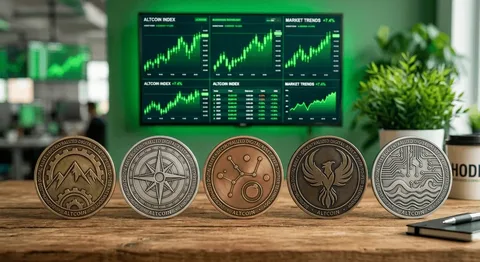
The cryptocurrency market has expanded far beyond Bitcoin since the launch of Altcoin market the first decentralized cryptocurrency. Today, thousands of digital assets operate across different blockchain networks, each designed with different technologies, purposes, and economic models. These cryptocurrencies are commonly known as Altcoins, a term formed from “alternative coins.”
In simple terms, Altcoins generally refer to cryptocurrencies other than Bitcoin. However, the category is extremely broad. It can include smart-contract platforms, payment cryptocurrencies, decentralized finance tokens, Layer 1 networks, Layer 2 ecosystems, governance tokens, meme coins, and other blockchain-based assets. Some projects focus on transaction speed and scalability, while others are designed to support decentralized applications, financial services, gaming, tokenization, or digital communities.
The meaning of Altcoins can also vary slightly within the cryptocurrency industry. CoinMarketCap notes that some market participants include Ethereum within the altcoin category, while others distinguish Ethereum from other altcoins and use the term for cryptocurrencies outside both Bitcoin and Ethereum.
Understanding Altcoins therefore requires more than looking at their prices. Investors, traders, developers, and cryptocurrency enthusiasts need to examine the technology behind a project, its purpose, tokenomics, adoption, development activity, liquidity, security, and broader market conditions. This guide explains how Altcoins work, their major categories, their relationship with Bitcoin, their potential advantages and risks, and the factors that can influence the altcoin market.
What Are Altcoins?
Altcoins are cryptocurrencies that are considered alternatives to Bitcoin. The word combines “alternative” and “coin,” reflecting the fact that Bitcoin was the first widely recognized cryptocurrency and subsequent digital currencies were developed as alternatives or extensions of the broader cryptocurrency concept.
The term covers a very diverse collection of blockchain projects. Some Altcoins operate on their own blockchains, while others are tokens created on existing networks. Their functions can be completely different. For example, one cryptocurrency may be used to pay blockchain transaction fees, another may provide governance rights within a decentralized protocol, and another may be associated with a digital application or financial ecosystem.
This diversity is one of the most important characteristics of the Altcoin market. Unlike Bitcoin, which was originally designed primarily as decentralized digital money, many alternative cryptocurrencies attempt to provide programmable blockchain infrastructure or specialized applications.
How Do Altcoins Work?
The technology behind Altcoins depends on the specific cryptocurrency. Different projects use different blockchain architectures, consensus mechanisms, token supplies, and governance systems.
Many blockchain networks use Proof of Stake (PoS) or variations of staking-based consensus. Under this model, participants can lock or stake their tokens to help secure the network and validate transactions. Other networks use different approaches, including Proof of Work, Delegated Proof of Stake, or alternative consensus mechanisms.
Some Altcoins are native assets of independent Layer 1 blockchains. Their tokens may be required to pay transaction fees, interact with decentralized applications, participate in governance, or secure the network. Other crypto assets exist as tokens on an established blockchain and depend on that network’s infrastructure.
The functionality of an Altcoin is therefore closely connected to its underlying blockchain technology. Understanding the network, its transaction model, security design, development activity, and ecosystem can provide more useful information than looking at price movements alone.
Major Types of Altcoins
Layer 1 Altcoins
Layer 1 Altcoins are native cryptocurrencies associated with independent blockchain networks. These networks provide the underlying infrastructure on which applications and other tokens can operate.
Layer 1 projects often compete around factors such as transaction speed, scalability, security, decentralization, interoperability, and developer accessibility. Ethereum, Solana, Avalanche, Aptos, and Sui are examples frequently discussed in the Layer 1 ecosystem.
Their native tokens can have several functions, including paying network fees, supporting staking, and participating in blockchain governance.
Layer 2 Altcoins
Layer 2 networks are designed to improve the scalability of an underlying blockchain. Many Layer 2 systems are connected to Ethereum and aim to process transactions more efficiently while ultimately using the underlying network for settlement or security.
Technologies such as optimistic rollups and zero-knowledge rollups are important within the Layer 2 ecosystem. Projects such as Arbitrum, Optimism, zkSync, and Starknet have been associated with this area of blockchain development.
The growth of Layer 2 technology reflects an ongoing effort to make decentralized applications more practical by increasing transaction capacity and potentially reducing costs.
DeFi Tokens
DeFi tokens are connected to decentralized finance applications and protocols. These ecosystems can provide services such as decentralized exchanges, lending, borrowing, liquidity provision, and other blockchain-based financial functions.
The value and usefulness of a DeFi token can depend on the activity and economics of the protocol behind it. Users should therefore examine factors such as protocol usage, token utility, governance structure, liquidity, and smart-contract risks.
Stablecoins
Stablecoins are another major category within the broader digital-asset ecosystem. They are designed to maintain relatively stable values, often by referencing a fiat currency such as the U.S. dollar.
Although some people use “altcoins” broadly enough to include stablecoins, the classification can vary depending on the source. Stablecoins have different economic characteristics from highly volatile cryptocurrencies and should not automatically be treated as equivalent to speculative Altcoins.
Meme Coins
Meme coins are cryptocurrencies whose popularity can be strongly influenced by internet culture, communities, social media, and public attention.
Some meme coins have developed large communities and significant trading activity, but their prices can also experience substantial volatility. Their market behavior demonstrates why investors should distinguish between community popularity, market liquidity, technological utility, and long-term adoption.
Utility and Governance Tokens
Utility tokens are designed to provide access to particular functions within a blockchain ecosystem. A token might be needed to use a service, pay fees, receive incentives, or access a platform.
Governance tokens, meanwhile, can allow holders to participate in decisions affecting decentralized protocols. Depending on the project, governance can cover issues such as protocol upgrades, treasury decisions, or parameter changes.
Altcoins vs Bitcoin
The biggest distinction between Altcoins and Bitcoin is that Bitcoin is the original cryptocurrency, while altcoins represent the much broader collection of cryptocurrencies that came after it.
Bitcoin has a relatively focused monetary design, while many Altcoins were created for specialized functions. Some aim to provide smart contracts, decentralized applications, faster transactions, lower fees, privacy features, tokenized assets, or other blockchain services.
Another important difference is market behavior. Smaller Altcoins can experience larger price fluctuations because their markets may have lower liquidity and smaller market capitalizations. This can create both rapid gains and significant losses.
Bitcoin’s larger market size also means that movements in Bitcoin can influence sentiment throughout the wider crypto market. Traders often monitor Bitcoin dominance to understand how much of the total cryptocurrency market capitalization is represented by Bitcoin.
What Is Altcoin Season?
Altcoin season is a term used to describe a period when alternative cryptocurrencies outperform or attract greater market attention relative to Bitcoin.
One commonly observed indicator is a change in Bitcoin dominance. When Bitcoin’s share of total crypto market capitalization declines while other cryptocurrencies gain market share, market participants may describe the environment as an altcoin season. CoinMarketCap also maintains an Altcoin Season Index designed to help monitor market rotation into and out of altcoins.
However, the existence of increased altcoin activity does not mean every cryptocurrency will perform similarly. Market cycles can be highly uneven, with liquidity concentrating in particular sectors, networks, or narratives.
Factors That Influence Altcoin Prices
The price of an Altcoin can be influenced by numerous factors. Market demand and supply are fundamental, but they are only part of the picture.
Tokenomics can have a significant impact. Investors often examine total supply, circulating supply, emissions, token unlock schedules, staking rewards, and token distribution. A project with a large amount of future supply entering circulation may experience different market dynamics from a cryptocurrency with a more limited supply schedule.
Technology and adoption are also important. Development activity, network usage, transaction activity, developer participation, ecosystem growth, and real-world applications can influence market perception.
Broader crypto market trends also matter. Changes in Bitcoin’s price, interest rates, liquidity conditions, regulatory developments, institutional participation, and investor sentiment can affect the entire digital-asset market.
Benefits and Potential Opportunities of Altcoins
One reason people follow Altcoins is the diversity of projects available in the market. Unlike a single cryptocurrency with a single primary design, the altcoin ecosystem includes projects focused on different technological and financial applications.
This diversity can contribute to blockchain innovation. Alternative networks have introduced new approaches to scalability, smart contracts, decentralized finance, interoperability, tokenization, and blockchain infrastructure.
Some Altcoins can also provide exposure to specific blockchain sectors. For example, someone researching decentralized finance may focus on DeFi-related projects, while another person interested in blockchain infrastructure may research Layer 1 or Layer 2 networks.
However, identifying a useful technology does not automatically mean its token will increase in value. The relationship between a project’s technology and the economics of its token should be examined separately.
Risks of Investing in Altcoins
The Altcoin market also carries substantial risks. Cryptocurrency prices can move quickly, and smaller projects can experience especially high volatility.
Liquidity is another concern. Some low-cap Altcoins may have relatively small trading volumes, which can make buying or selling large positions more difficult without affecting the market price.
Project failure is another risk. Some cryptocurrencies may have limited development, weak adoption, unclear utility, or unsustainable economic models. CoinMarketCap highlights volatility, illiquidity, and projects lacking meaningful use cases among important disadvantages associated with altcoins.
Security risks should also be considered. Smart-contract vulnerabilities, bridge exploits, exchange failures, compromised wallets, and fraudulent projects can result in financial losses.
For these reasons, researching an Altcoin should involve more than examining its recent price chart.
How to Research Altcoins
A careful Altcoin analysis begins with understanding what the project is designed to accomplish. Read the official documentation and examine whether the proposed technology solves a meaningful problem.
Next, investigate the project’s tokenomics. Consider circulating supply, maximum supply, token distribution, emissions, unlock schedules, and the actual utility of the token.
It is also useful to examine network activity and ecosystem development. Developer activity, decentralized application usage, transaction growth, liquidity, partnerships, and community participation can provide additional context.
Market capitalization is another important metric. A low token price does not necessarily mean a cryptocurrency is inexpensive. The total supply of the token must be considered when evaluating its market capitalization.
Finally, consider security and transparency. Review the project’s history, development team information where available, audits, governance structure, and any known security incidents.
Altcoins and the Future of Cryptocurrency
The future of Altcoins will likely remain connected to the broader development of blockchain technology. Areas such as decentralized finance, tokenized real-world assets, Layer 2 scaling, interoperability, blockchain gaming, and programmable financial infrastructure continue to attract development and research.
At the same time, the market is becoming increasingly competitive. Projects must demonstrate practical utility, sustainable economics, reliable technology, and genuine user adoption to remain relevant over time.
Recent industry research has also highlighted how excessive token issuance, unlocks, and weak activity-to-valuation relationships can affect altcoin valuations. This suggests that market participants increasingly pay attention to actual network usage and economic sustainability rather than relying only on narratives.
As blockchain adoption develops, the term Altcoins will continue to cover a broad range of digital assets. Some may become important infrastructure, while others may disappear as technology and market preferences change.
Conclusion
Altcoins represent a large and diverse part of the cryptocurrency ecosystem. Although the term simply means cryptocurrencies other than Bitcoin, it includes many different categories, from Layer 1 networks and Layer 2 solutions to DeFi tokens, governance assets, utility tokens, stablecoins, and meme coins.
Understanding Altcoins requires looking beyond price. Technology, tokenomics, liquidity, network activity, adoption, security, and market conditions can all influence how a cryptocurrency develops.
For anyone researching the altcoin market, the most useful approach is to understand the purpose and economics of each individual project rather than assuming that all alternative cryptocurrencies behave in the same way. The cryptocurrency market changes quickly, so current data and independent research remain essential when evaluating any digital asset.
FAQs About Altcoins
1. What are Altcoins?
Altcoins are generally cryptocurrencies other than Bitcoin. The category includes many different types of digital assets, including smart-contract platforms, Layer 1 networks, DeFi tokens, governance tokens, and meme coins.
2. Is Ethereum an Altcoin?
The classification varies. Some sources consider Ethereum an Altcoin because it is not Bitcoin, while others distinguish Ethereum from the broader altcoin category. CoinMarketCap specifically notes both approaches.
3. What is Altcoin Season?
Altcoin season describes a period when alternative cryptocurrencies receive increased market attention or outperform Bitcoin across a broad portion of the market. Bitcoin dominance is one metric frequently monitored when studying these market rotations.
4. Why are Altcoins volatile?
Many Altcoins have smaller market capitalizations and lower liquidity than Bitcoin. Their prices can therefore react strongly to changes in market sentiment, trading activity, news, token unlocks, and broader cryptocurrency trends.
5. How can I research an Altcoin?
Start by studying the project’s purpose, Altcoin market technology, tokenomics, circulating supply, development activity, network usage, liquidity, security history, and adoption. Reviewing multiple reliable sources can help provide a more complete picture before making any financial decision.