admin
The cryptocurrency market extends far beyond Bitcoin. While Bitcoin remains the largest and most widely recognized digital asset, thousands of other cryptocurrencies compete across different categories, including smart contracts, decentralized finance, gaming, artificial intelligence, payments, infrastructure, and digital applications. These assets are commonly known as altcoins, making Altcoin Analysis an important part of understanding the broader crypto market.
Altcoins can behave very differently from Bitcoin. Some follow BTC’s overall direction, while others respond more strongly to project-specific developments, network upgrades, token launches, ecosystem growth, liquidity, or changes in investor sentiment. Because of these differences, analyzing altcoins requires more than simply checking their current prices.
Effective Altcoin Analysis combines price action, trading volume, market capitalization, technical indicators, tokenomics, network activity, liquidity, development activity, and broader market conditions. Traders and investors can use these factors to understand how different cryptocurrencies are performing and what forces may be influencing their markets.
The altcoin market can also change rapidly. A cryptocurrency that attracts significant attention during one market cycle may experience declining interest later, while emerging sectors can suddenly gain momentum. Understanding these market dynamics can help readers develop a more structured approach to researching digital assets.
What Is Altcoin Analysis?
Altcoin Analysis refers to the process of studying cryptocurrencies other than Bitcoin to understand their price behavior, market trends, fundamentals, risks, and potential market opportunities.
An altcoin can be almost any cryptocurrency that is not Bitcoin. Ethereum is often considered the largest altcoin, while thousands of smaller assets operate across different blockchain ecosystems.
Analysis can include technical analysis, fundamental research, market sentiment, tokenomics, trading volume, liquidity, and blockchain activity.
The goal is not simply to determine whether an altcoin will rise or fall. Instead, analysis provides a framework for understanding why an asset is moving and what factors could influence its future market behavior.
Why Altcoin Analysis Matters
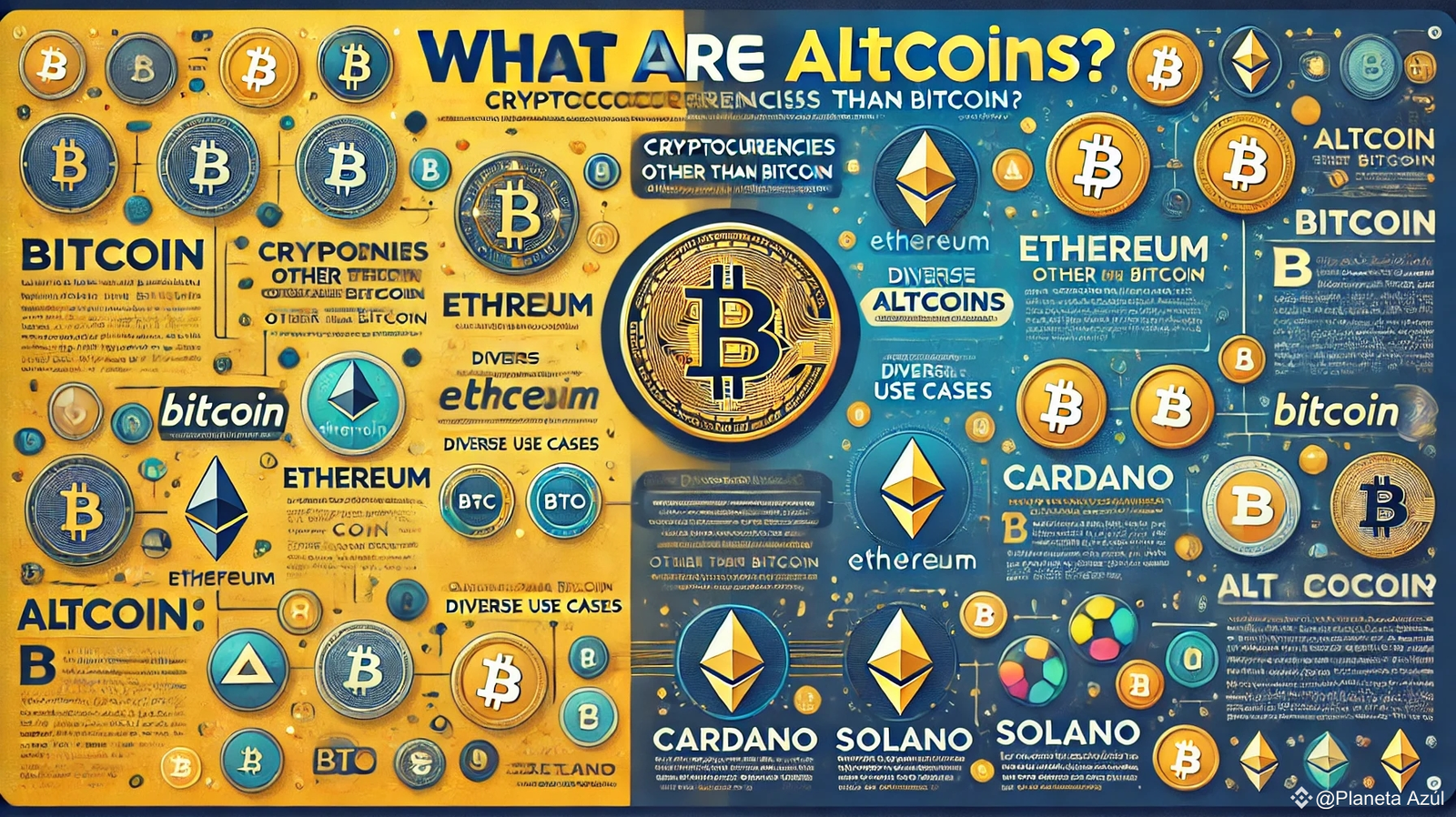
The altcoin market represents a significant part of the overall cryptocurrency ecosystem.
Altcoins are used for decentralized applications, smart contracts, financial protocols, gaming ecosystems, payments, infrastructure, governance, and many other purposes.
Because each project can have different technology and economics, investors often need to conduct individual research.
Altcoin market analysis can help identify differences between established cryptocurrencies and newer projects. It can also help explain why two assets operating in the same sector may experience completely different price movements.
Understanding these differences becomes particularly important during periods of high market volatility.
Altcoin Market Trends
Altcoin market trends are strongly influenced by Bitcoin and overall crypto liquidity.
When Bitcoin experiences strong momentum, capital can sometimes move into larger altcoins before eventually reaching smaller cryptocurrencies. This pattern is often discussed in relation to crypto market cycles.
However, the movement of capital is not guaranteed to follow a fixed sequence.
Some altcoins can outperform because of project-specific developments, while others can decline even when the broader crypto market is rising.
This makes sector-specific research important for understanding altcoin performance.
Bitcoin’s Influence on Altcoins
Bitcoin remains a major influence on the broader cryptocurrency market.
Many traders monitor BTC before making decisions about altcoins because Bitcoin’s price movements can affect market-wide sentiment and liquidity.
When Bitcoin experiences a sharp correction, altcoins can sometimes experience larger percentage declines because they generally have smaller market capitalizations and lower liquidity than BTC.
Conversely, periods of strong Bitcoin stability can sometimes create an environment where traders pay greater attention to alternative cryptocurrencies.
For this reason, Altcoin Analysis often begins with an examination of Bitcoin’s broader market structure.
Ethereum and the Altcoin Market
Ethereum occupies an important position in the altcoin ecosystem because it supports smart contracts and decentralized applications.
The Ethereum network has become a foundation for decentralized finance, NFTs, tokenized assets, and many blockchain-based applications.
As a result, Ethereum Analysis can provide useful context for the broader altcoin market.
Ethereum’s performance can also influence sentiment toward smart-contract platforms and related crypto sectors.
However, Ethereum’s price behavior does not determine how every altcoin will perform.
Altcoin Technical Analysis
Technical analysis is one of the most commonly used methods for studying altcoins.
Traders may examine support and resistance, moving averages, RSI, MACD, trendlines, candlestick patterns, Fibonacci levels, and trading volume.
For example, an altcoin making higher highs and higher lows may be showing an established uptrend. An asset making lower highs and lower lows may be displaying a declining market structure.
Technical indicators can provide additional information about momentum, but they should not be treated as guaranteed signals.
Altcoin Support and Resistance
Support and resistance are important concepts in Altcoin Analysis.
Support represents an area where buying activity may increase and slow a decline. Resistance represents a zone where selling pressure may become stronger.
Altcoins can react sharply around these levels because liquidity can be thinner than in larger cryptocurrencies.
A resistance breakout accompanied by strong volume may attract additional attention, while a breakdown below major support can change the short-term market structure.
These levels should be treated as zones rather than exact prices.
Moving Averages for Altcoins
Moving averages help traders identify the general direction of an altcoin’s price.
Common averages include the 20-day, 50-day, 100-day, and 200-day moving averages.
Shorter averages respond quickly to price changes, while longer averages provide broader trend information.
When an altcoin trades above a major moving average, traders may interpret its market structure differently than when it remains below that average.
Moving averages are lagging indicators, meaning they are calculated from previous price data.
RSI and Altcoin Momentum
The Relative Strength Index, or RSI, is commonly used to evaluate altcoin momentum.
RSI ranges from 0 to 100. Traditionally, readings above 70 are associated with potentially overbought conditions, while readings below 30 are associated with potentially oversold conditions.
However, these levels do not automatically predict reversals.
An altcoin can remain above 70 during a powerful uptrend or below 30 during a prolonged decline.
Therefore, RSI is most useful when combined with price structure and other indicators.
MACD for Altcoin Analysis
The MACD indicator is another popular tool for evaluating altcoin momentum.
MACD compares moving averages and can help identify changes in momentum.
A bullish crossover may indicate improving momentum, while a bearish crossover may indicate weakening momentum.
Traders sometimes examine divergence between MACD and price to identify potential changes in market strength.
However, MACD can produce false signals, especially during sideways markets.
Altcoin Trading Volume
Trading volume is particularly important when analyzing smaller cryptocurrencies.
An altcoin can experience a large percentage price change simply because its market liquidity is relatively limited.
Strong volume during a breakout can provide additional confirmation that market participation is increasing.
Conversely, a price movement with very low volume may be less convincing.
Volume should therefore be considered alongside market capitalization, exchange liquidity, and price structure.
Altcoin Market Capitalization
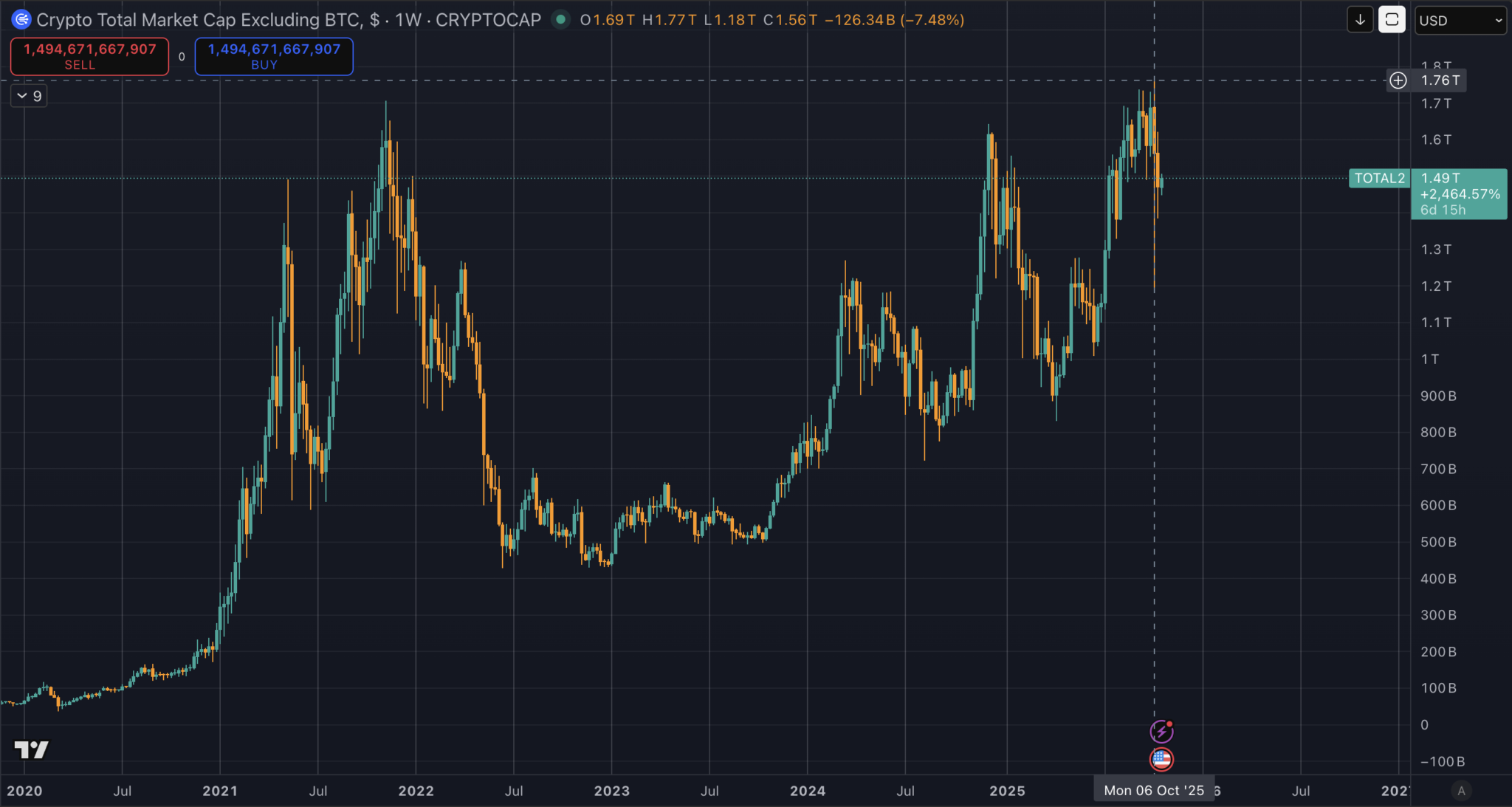
Market capitalization is calculated by multiplying an asset’s price by its circulating supply.
It provides a basic indication of the overall market value assigned to a cryptocurrency.
Large-cap altcoins generally have greater market visibility and liquidity than many small-cap projects.
Mid-cap and small-cap cryptocurrencies may experience larger percentage movements but can also carry greater liquidity and volatility risks.
Market capitalization should therefore be considered alongside other factors rather than used as a standalone quality measure.
Altcoin Dominance
Altcoin dominance refers broadly to the portion of the cryptocurrency market represented by altcoins rather than Bitcoin.
Market participants often watch Bitcoin dominance to understand how capital is distributed between BTC and the rest of the market.
When Bitcoin dominance changes, some traders interpret it as a possible sign that market attention is shifting between Bitcoin and altcoins.
However, dominance metrics should be interpreted alongside actual price performance and trading volume.
Altcoin Sectors
The altcoin market contains many different sectors.
DeFi, or decentralized finance, includes cryptocurrencies and protocols designed to provide financial services through blockchain networks.
Layer 1 blockchains provide their own blockchain infrastructure, while Layer 2 networks are designed to improve scalability for existing ecosystems.
Other major categories include gaming tokens, artificial intelligence projects, decentralized storage, interoperability platforms, oracle networks, stablecoins, and tokenized real-world assets.
Different sectors can experience different market cycles.
DeFi Altcoin Analysis
DeFi altcoins are connected to decentralized financial applications such as decentralized exchanges, lending platforms, liquidity protocols, and derivatives systems.
When DeFi activity increases, tokens associated with these ecosystems may attract greater attention.
However, DeFi projects can also face smart-contract risks, regulatory uncertainty, liquidity problems, and changing user activity.
Fundamental research is therefore particularly important when analyzing DeFi cryptocurrencies.
Layer 1 Altcoin Analysis
Layer 1 networks compete to provide blockchain infrastructure for applications and transactions.
Ethereum, Solana, Avalanche, Cardano, and other blockchain ecosystems have different technical architectures, transaction models, development communities, and token economics.
Layer 1 analysis can include transaction activity, developer growth, network fees, applications, validator participation, and ecosystem expansion.
Price performance alone may not capture the full picture of a blockchain network.
Layer 2 Market Trends
Layer 2 networks aim to improve blockchain scalability and transaction efficiency.
These ecosystems have become an important part of Ethereum’s broader development.
Layer 2 altcoin analysis may involve examining transaction activity, total value locked, user growth, token utility, network fees, and ecosystem applications.
Because Layer 2 technology continues to evolve, traders may also need to monitor technical upgrades and competition between networks.
AI Crypto and Altcoins
Artificial intelligence has become an important narrative within the cryptocurrency market.
AI crypto projects can focus on decentralized computing, data marketplaces, AI agents, infrastructure, machine learning networks, and related applications.
The sector can experience significant market attention when AI becomes a dominant investment theme.
However, investors should distinguish between genuine technological utility and projects that simply use AI-related marketing.
Fundamental research remains important when evaluating these cryptocurrencies.
Altcoin Tokenomics
Tokenomics refers to the economic design of a cryptocurrency.
Important factors include total supply, circulating supply, inflation rate, token distribution, vesting schedules, staking mechanisms, token burns, and utility.
A project may have a low current price but a very large supply, meaning its market capitalization can still be substantial.
Similarly, a token with a small circulating supply may experience additional selling pressure when locked tokens are released.
Understanding tokenomics is therefore a central part of fundamental Altcoin Analysis.
Token Unlocks and Altcoin Prices
Token unlocks occur when previously restricted tokens become available to investors, teams, advisors, or other participants.
Large unlocks can increase the amount of tokens potentially available for trading.
The market reaction depends on several factors, including the size of the unlock, existing liquidity, investor behavior, and overall market conditions.
Traders researching an altcoin should therefore review its token-unlock schedule when evaluating potential supply changes.
Altcoin On-Chain Analysis
On-chain analysis examines blockchain data to understand network activity and user behavior.
Depending on the blockchain, analysts can study transaction counts, active addresses, token transfers, exchange balances, staking activity, total value locked, and other network metrics.
On-chain information can complement technical price analysis.
For example, rising network activity alongside stable price action may provide additional context about an ecosystem’s development.
However, on-chain metrics also require interpretation because increased activity does not always translate directly into higher token value.
Altcoin Liquidity
Liquidity is an important consideration in cryptocurrency markets.
Highly liquid assets generally have greater trading activity and can be easier to buy or sell without significantly affecting the market price.
Smaller altcoins may have lower liquidity, which can contribute to wider spreads and sharper price movements.
This is one reason why percentage gains and losses can be much larger among small-cap cryptocurrencies.
Altcoin Market Cycles
The crypto market moves through different phases of expansion, consolidation, correction, and recovery.
During strong market expansions, speculative interest can increase and traders may move into smaller cryptocurrencies.
During market downturns, liquidity can decline rapidly and investors may move toward larger, more established assets.
Understanding altcoin market cycles can provide useful context when analyzing individual projects.
Nevertheless, every market cycle has unique characteristics.
Altcoin Correlation With Bitcoin
Many altcoins have some degree of correlation with Bitcoin.
When BTC rises strongly, altcoins may benefit from improving market sentiment. When BTC falls sharply, altcoins can experience increased selling pressure.
The strength of this relationship varies between assets and across different periods.
Some cryptocurrencies can temporarily move independently because of project-specific news or sector-specific developments.
Altcoin News and Market Sentiment
Crypto news can have a significant impact on altcoin prices.
Exchange listings, network upgrades, partnerships, regulatory announcements, security incidents, token unlocks, ecosystem growth, and major product releases can all influence sentiment.
News-driven price movements can occur quickly, making it important to verify information through reliable sources.
Traders should also distinguish between confirmed announcements and social-media speculation.
Altcoin Risk Factors
Altcoins can involve significant risks.
Some projects have limited liquidity, high volatility, uncertain token utility, concentrated ownership, or aggressive token emission schedules.
Smart-contract vulnerabilities and security incidents can also affect decentralized applications and their associated tokens.
Regulatory developments may create additional uncertainty.
For these reasons, Altcoin Analysis should include risk assessment rather than focusing exclusively on potential price movements.
How to Research an Altcoin
A structured research process can begin with understanding the project’s purpose and technology.
Next, investors can examine tokenomics, circulating supply, market capitalization, liquidity, trading volume, development activity, ecosystem growth, and community engagement.
Technical analysis can then provide information about price trends, support, resistance, momentum, and market structure.
Combining these factors creates a more complete research framework than relying on social-media discussions or short-term price movements alone.
Technical vs Fundamental Altcoin Analysis
Technical Analysis focuses primarily on charts, price, volume, and market indicators.
Fundamental Analysis focuses on the underlying project, including technology, adoption, tokenomics, development, ecosystem activity, and market position.
Both approaches provide different types of information.
Technical analysis may help traders understand short- and medium-term price structure, while fundamental research can provide context about a project’s longer-term development.
Altcoin Analysis During Bull Markets
During a crypto bull market, altcoins can attract substantial attention.
Increasing liquidity and investor confidence may create demand for assets beyond Bitcoin.
However, rising prices can also encourage excessive speculation.
Technical momentum should therefore be evaluated alongside project fundamentals and market capitalization.
A rapidly rising price does not automatically indicate that an asset’s underlying network or adoption is growing at the same rate.
Altcoin Analysis During Bear Markets
During a bear market, altcoin liquidity can decline and investors may become more selective.
Smaller projects can experience larger drawdowns because their markets may be thinner.
Fundamental developments can become particularly important during these periods because projects with active development and sustainable ecosystems may behave differently from assets driven primarily by speculation.
Historical performance alone should not be treated as a guarantee of future recovery.
The Role of Stablecoins
Stablecoins play an important role in the broader crypto market because they provide digital assets designed to maintain relatively stable values against reference currencies or other assets.
Traders frequently use stablecoins as a quote currency when trading altcoins.
Changes in stablecoin supply and liquidity can therefore influence the amount of capital available across cryptocurrency markets.
Stablecoin activity can be included in broader market-liquidity analysis.
Future Altcoin Trends
Future altcoin trends will likely be influenced by several major themes, including blockchain scalability, decentralized finance, tokenized real-world assets, artificial intelligence, gaming, infrastructure, stablecoins, and institutional adoption.
The market is likely to continue evolving as new technologies and applications emerge.
At the same time, competition between blockchain ecosystems may become stronger.
Projects with active development, useful applications, sustainable economics, and growing ecosystems may receive greater attention, although market performance will continue to depend on broader liquidity and investor behavior.
Conclusion
Altcoin Analysis provides a framework for understanding the complex and rapidly changing cryptocurrency market beyond Bitcoin.
Successful analysis can combine technical indicators such as support, resistance, moving averages, RSI, MACD, candlestick patterns, trendlines, and volume with fundamental factors including tokenomics, liquidity, network activity, development, adoption, and ecosystem growth.
Bitcoin remains an important market influence, while Ethereum and other major blockchain ecosystems contribute significantly to the broader altcoin landscape.
Different sectors can behave differently depending on market conditions. DeFi, Layer 1 networks, Layer 2 solutions, AI-related cryptocurrencies, gaming projects, and tokenized assets can each develop their own narratives and cycles.
For anyone researching altcoins, the most useful approach is to avoid relying on a single metric. Combining Altcoin Market Analysis, technical data, fundamental research, liquidity information, and risk management can provide a more complete picture.
Cryptocurrency markets remain highly volatile, and technical patterns or historical trends cannot guarantee future performance. Careful research and disciplined risk management remain important when evaluating digital assets.
Frequently Asked Questions
What is Altcoin Analysis?
Altcoin Analysis is the process of studying cryptocurrencies other than Bitcoin using technical, fundamental, market, and on-chain information.
Which indicators are useful for Altcoin Analysis?
Common indicators include moving averages, RSI, MACD, support and resistance, Fibonacci retracement, trendlines, and trading volume.
Why is Bitcoin important for altcoins?
Bitcoin has a major influence on overall crypto-market sentiment and liquidity. Large BTC price movements can sometimes affect altcoin prices significantly.
What is altcoin season?
Altcoin season is a period when many altcoins outperform Bitcoin over a sustained period. The exact definition and measurement can vary between analysts and market-data providers.
Is Altcoin Analysis suitable for beginners?
Yes. Beginners can start with basic concepts such as market capitalization, tokenomics, support, resistance, volume, and trend analysis before exploring more advanced indicators.
What is the biggest factor in altcoin prices?
There is no single factor that determines altcoin prices. Market Altcoin Analysis liquidity, Bitcoin movements, investor sentiment, tokenomics, project developments, adoption, trading volume, and broader economic conditions can all influence prices.

 Hassan malik