
 Hassan malik
The cryptocurrency market is much broader than Bitcoin. Thousands of digital assets now compete across different sectors, including decentralized finance, smart-contract platforms, Layer 2 networks, gaming, infrastructure, artificial intelligence, stablecoins, and meme coins. Understanding how these assets behave requires a detailed approach to Altcoin Market Analysis.
Altcoins can experience significantly different price movements depending on market liquidity, Bitcoin’s direction, investor sentiment, project fundamentals, trading volume, token economics, and broader economic conditions. Some altcoins may rise strongly when Bitcoin is stable, while others can remain weak even during a broader cryptocurrency rally.
The altcoin market can also move through different phases. During some periods, investors focus primarily on Bitcoin. Later, capital can rotate into Ethereum and other large-cap cryptocurrencies before moving toward smaller and more speculative assets. This process is often associated with altcoin season, although there is no universal definition of when such a season begins or ends.
For anyone studying cryptocurrency markets, Altcoin Market Analysis provides a framework for understanding these movements. Instead of focusing only on whether a particular token is going up or down, analysis can consider market capitalization, Bitcoin dominance, trading volume, liquidity, technical structure, sector performance, and fundamental developments.
This article explores the major factors that influence the altcoin market and explains how beginners can understand altcoin trends, market cycles, technical indicators, and risk without relying on a single market signal.
What Is Altcoin Market Analysis?
Altcoin Market Analysis is the process of studying cryptocurrencies other than Bitcoin to understand their price behavior, market trends, momentum, liquidity, and fundamental conditions.
The term altcoin traditionally refers to alternative cryptocurrencies outside Bitcoin. Ethereum is often included in the broad altcoin category, although its market size and ecosystem make it different from smaller projects.
Altcoin analysis can involve both technical and fundamental research.
Technical analysis examines charts, price patterns, trading volume, support, resistance, moving averages, and momentum indicators.
Fundamental analysis examines a project’s technology, adoption, development activity, token economics, ecosystem growth, competition, and potential use cases.
Combining these approaches can provide a broader picture of the market.
Understanding the Altcoin Market
The altcoin market is not one uniform group.
Different cryptocurrencies have different purposes and market structures.
Ethereum focuses heavily on smart contracts and decentralized applications. Other Layer 1 networks compete around scalability, transaction speed, fees, and ecosystem development. DeFi tokens are connected to decentralized financial protocols, while meme coins often depend heavily on community interest and speculation.
Because these categories behave differently, market-wide analysis should examine individual sectors as well as the overall altcoin market.
A strong performance from one sector does not necessarily mean the entire altcoin market is experiencing the same trend.
Bitcoin’s Influence on Altcoins
Bitcoin remains one of the most important factors in Altcoin Market Analysis.
Because BTC has historically represented a large portion of total cryptocurrency market capitalization, its price movements can strongly affect market sentiment.
When Bitcoin experiences a sharp decline, altcoins often face additional pressure because traders may reduce risk across the broader market.
When Bitcoin enters a period of consolidation, investors may begin searching for opportunities elsewhere.
This can sometimes lead to capital rotation into Ethereum and other altcoins.
However, this pattern is not guaranteed. Altcoins can decline even while Bitcoin remains stable, and Bitcoin can rally while many altcoins underperform.
Bitcoin Dominance and Altcoins
Bitcoin dominance measures Bitcoin’s percentage share of total cryptocurrency market capitalization.
It is an important metric for studying the relative strength of Bitcoin and altcoins.
When Bitcoin dominance rises, Bitcoin is capturing a larger portion of the total crypto market value.
When dominance declines, altcoins may be gaining market capitalization relative to Bitcoin.
However, Bitcoin dominance should not be interpreted by itself.
Changes in stablecoin market capitalization, Ethereum’s performance, new token issuance, and broader market movements can also affect the calculation.
For this reason, analysts usually combine dominance data with price and volume information.
Altcoin Market Capitalization
Altcoin market capitalization provides another important view of the market.
Instead of studying individual tokens, analysts can examine the combined value of cryptocurrencies outside Bitcoin.
A rising altcoin market capitalization can indicate expanding demand across alternative cryptocurrencies.
However, market capitalization can be influenced heavily by a small number of large assets.
For this reason, it is useful to compare total market capitalization with the performance of different sectors and individual cryptocurrencies.
Ethereum’s Role in Altcoin Market Analysis
Ethereum has a unique position within the altcoin market.
Its blockchain supports smart contracts, decentralized applications, decentralized finance, NFTs, tokenized assets, and numerous Layer 2 networks.
Because of its size and ecosystem, Ethereum’s performance is often monitored when assessing broader altcoin trends.
When ETH gains momentum, traders may begin examining other sectors of the altcoin market.
However, Ethereum’s performance does not guarantee that smaller altcoins will follow.
Different assets have different liquidity, market capitalization, and fundamental drivers.
Altcoin Market Trends
Altcoin market trends can change quickly.
A bullish trend generally involves higher highs and higher lows, while a bearish trend involves lower highs and lower lows.
A sideways market occurs when prices remain within a relatively defined range.
Trend analysis becomes more useful when multiple timeframes are considered.
A token can appear bullish on a four-hour chart while remaining bearish on a weekly chart.
This is why professional market analysis often separates short-term momentum from longer-term structure.
Altcoin Season
Altcoin season refers to a period when a broad group of altcoins outperform Bitcoin over a specific timeframe.
It is often associated with declining Bitcoin dominance, increasing altcoin market capitalization, stronger trading volume, and increased investor interest.
However, there is no single universally accepted definition.
Some market indicators use a specific basket of cryptocurrencies and compare their performance with Bitcoin.
A strong altcoin market does not necessarily mean that every token is rising.
Some sectors may outperform while others remain weak.
Altcoin Season Indicators
Several indicators can help analysts study whether the market is becoming more favorable toward altcoins.
Bitcoin dominance is one of the most commonly discussed indicators.
The relative performance of ETH against BTC can provide another perspective.
Altcoin market capitalization, trading volume, liquidity, and sector performance can also provide useful information.
The Altcoin Season Index is another commonly referenced measurement.
These indicators should be used together rather than treating one reading as a definitive market signal.
Altcoin Trading Volume
Altcoin trading volume measures how much trading activity occurs during a particular period.
Volume can help analysts evaluate the strength of a price movement.
If an altcoin breaks above resistance with strong volume, the move may show greater market participation than a breakout occurring with very little trading activity.
On the other hand, rising prices with weak volume may require additional confirmation.
Volume should always be considered alongside liquidity and market structure.
Altcoin Liquidity
Altcoin liquidity describes how easily a cryptocurrency can be bought or sold without causing a large price change.
Large-cap cryptocurrencies generally have deeper markets than small-cap tokens.
Lower liquidity can create wider spreads and greater price impact.
This is especially important during market declines because liquidity can disappear quickly when traders rush to sell.
Understanding liquidity is therefore an essential part of responsible Altcoin Market Analysis.
Large-Cap Altcoins
Large-cap altcoins generally have greater market capitalization and liquidity than smaller cryptocurrencies.
Ethereum is one of the most prominent examples.
Large-cap assets can attract institutional investors, retail traders, and long-term participants.
Their larger markets can also make them less susceptible to extreme price movements than very small cryptocurrencies, although they remain volatile.
When analyzing large-cap altcoins, investors may examine network adoption, ecosystem activity, revenue models, token economics, and technical market structure.
Mid-Cap Altcoins
Mid-cap altcoins occupy a middle position between established large cryptocurrencies and smaller projects.
These assets can attract investors interested in blockchain projects with developing ecosystems and potentially higher growth rates.
However, mid-cap assets can also experience significant volatility.
Market liquidity, token supply, development activity, competitive positioning, and user adoption can be important considerations.
Small-Cap Altcoins
Small-cap altcoins can experience very large percentage price movements.
Because their market capitalization is relatively low, comparatively small amounts of buying or selling can have a noticeable impact.
This can produce rapid rallies but also severe declines.
Some small-cap tokens may have limited exchange availability and low liquidity.
For this reason, market capitalization alone should never be treated as evidence that a cryptocurrency has strong fundamentals.
DeFi Tokens
DeFi tokens represent another major part of the altcoin market.
Decentralized finance applications attempt to provide financial services using blockchain-based protocols.
These applications can include decentralized exchanges, lending protocols, liquid staking, derivatives, and other financial infrastructure.
When DeFi activity increases, related tokens can attract market attention.
However, token performance can differ from protocol usage.
Investors analyzing DeFi assets may therefore examine both market data and the underlying project’s activity.
Layer 1 Cryptocurrencies

Layer 1 cryptocurrencies operate on their own blockchain networks.
These networks compete in areas such as scalability, transaction fees, security, decentralization, developer adoption, and ecosystem growth.
During periods of strong market demand, investors may rotate between different Layer 1 projects.
However, competition within this sector remains significant.
A project’s technical performance does not automatically translate into token price appreciation.
Layer 2 Tokens
Layer 2 networks are designed to improve scalability and efficiency for underlying blockchain systems.
Ethereum’s Layer 2 ecosystem has become an important part of the broader cryptocurrency infrastructure.
The growth of Layer 2 activity can influence demand for associated tokens and applications.
When analyzing Layer 2 assets, investors can examine transaction activity, ecosystem growth, fees, developer adoption, and token economics.
Meme Coins
Meme coins are among the most speculative parts of the cryptocurrency market.
Their price movements can be strongly influenced by social media attention, community activity, celebrity mentions, online trends, and speculation.
During periods of strong market sentiment, meme coins can experience extremely rapid increases in trading volume.
However, they can also experience equally rapid declines.
For this reason, meme coins require a different risk framework from established large-cap cryptocurrencies.
Technical Analysis of Altcoins
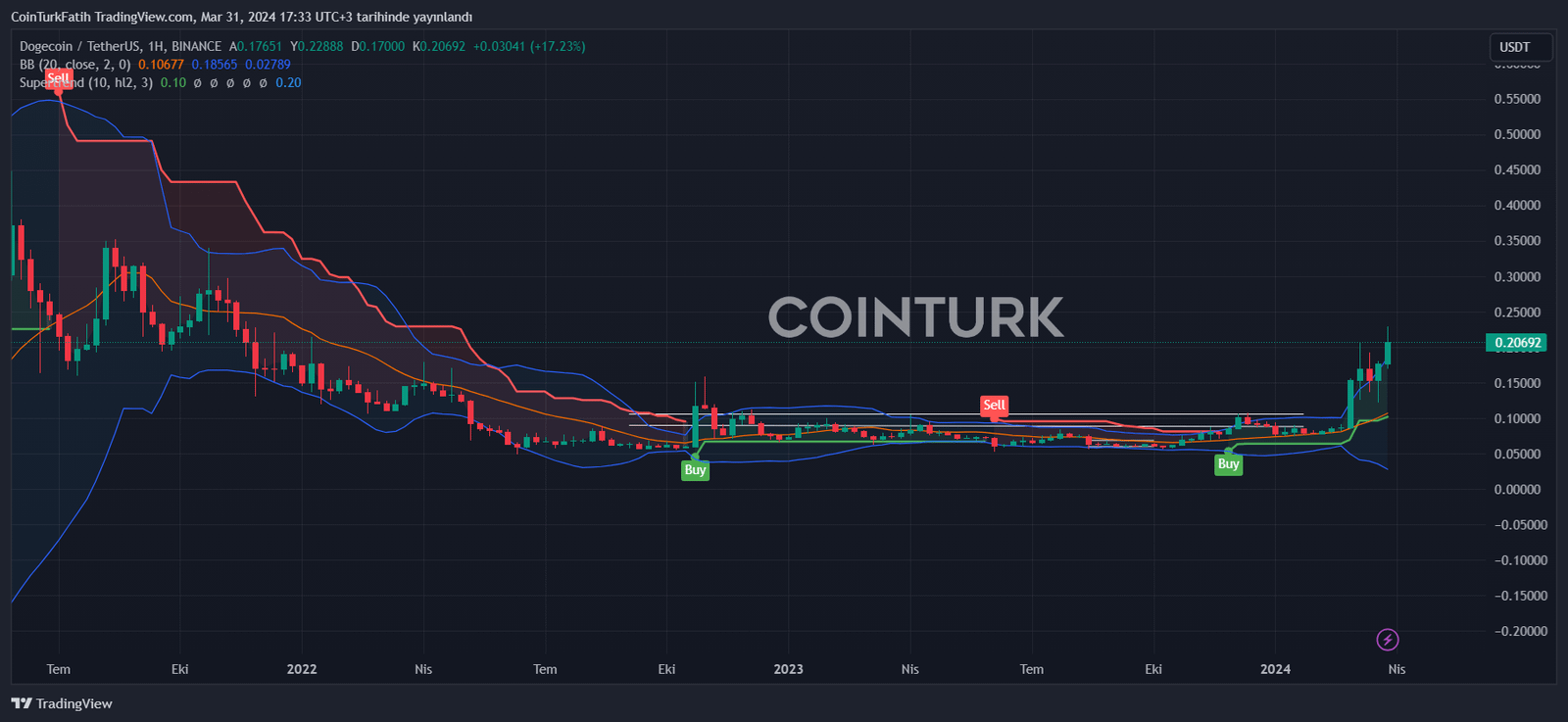
Technical analysis is a major component of Altcoin Market Analysis.
Traders may study support and resistance, trendlines, moving averages, RSI, MACD, Bollinger Bands, Fibonacci retracement levels, and trading volume.
Support represents an area where buying activity has previously appeared.
Resistance represents an area where selling pressure has previously limited upward movement.
These levels are generally better viewed as zones rather than exact prices.
Altcoin Moving Averages
Moving averages smooth price data to make market trends easier to analyze.
Commonly used averages include the 20-day, 50-day, and 200-day moving averages.
When an altcoin trades above a major moving average, analysts may view the trend as stronger than when price remains below it.
Moving averages are lagging indicators, however.
They respond to historical price movements and cannot guarantee future direction.
Altcoin RSI
The Relative Strength Index, or RSI, measures recent price momentum.
Traditional technical analysis often considers RSI above 70 as potentially overbought and below 30 as potentially oversold.
However, an altcoin can remain overbought during a powerful trend.
Likewise, an oversold reading does not guarantee that a cryptocurrency will immediately recover.
RSI can be more useful when combined with market structure, volume, and support or resistance.
Altcoin MACD
The MACD indicator is used to examine momentum and potential trend changes.
Traders often monitor the relationship between the MACD line and signal line.
A bullish crossover can indicate improving momentum, while a bearish crossover can suggest weakening momentum.
MACD divergence can also provide information when price and momentum move in different directions.
As with other indicators, MACD should not be used as an isolated trading signal.
Altcoin Support and Resistance
Altcoin support and resistance levels can help traders understand important areas on a chart.
Previous highs and lows often become reference points.
Psychological price levels can also attract trading activity.
When price repeatedly reacts around the same area, that zone may become technically significant.
However, support and resistance can fail during major market events.
Strong news, liquidity changes, or Bitcoin volatility can cause altcoins to move rapidly through previously established levels.
Altcoin Breakouts
An altcoin breakout occurs when price moves outside a significant consolidation or resistance area.
Traders often look for confirmation through trading volume and sustained price action.
A breakout with increasing volume may indicate stronger participation.
However, false breakouts are common.
Price can briefly move above resistance before falling back into its previous range.
This is why confirmation and risk management remain important.
Altcoin Market Cycles
The cryptocurrency market moves through different phases.
During accumulation, prices may remain relatively quiet while long-term participants gradually build positions.
During expansion, prices and trading activity can increase.
During speculative phases, smaller cryptocurrencies may experience rapid gains.
Eventually, corrections can occur as investors take profits or market liquidity decreases.
These phases do not always occur in the same order or duration.
Historical cycles can provide context, but they should not be treated as guaranteed forecasts.
Market Liquidity and Stablecoins
Stablecoins play an important role in cryptocurrency liquidity.
Stablecoins provide a digital asset designed to maintain relatively stable value against a reference currency, usually the U.S. dollar.
Traders frequently use stablecoins to move between different cryptocurrency positions without converting immediately into traditional fiat currency.
Changes in stablecoin supply and usage can therefore provide useful information when studying broader crypto market liquidity.
Altcoin Market Sentiment
Altcoin market sentiment can change rapidly.
Positive sentiment can encourage investors to take greater risks and explore smaller assets.
Negative sentiment can cause capital to move toward Bitcoin, stablecoins, or traditional assets.
Social media can amplify both positive and negative sentiment.
However, social-media popularity does not necessarily indicate strong fundamentals.
Analysts should distinguish between genuine market adoption and short-term speculation.
Fundamental Analysis of Altcoins
Technical charts only provide part of the picture.
Altcoin fundamental analysis examines factors such as technology, adoption, development activity, tokenomics, partnerships, competition, network usage, and the project’s long-term objectives.
For example, a blockchain with increasing transaction activity may deserve a different analysis from a token whose primary activity comes from short-term speculation.
Fundamental research can therefore complement technical analysis.
Altcoin Tokenomics
Tokenomics refers to the economic design of a cryptocurrency.
Important considerations can include total supply, circulating supply, token distribution, emissions, vesting schedules, staking rewards, and token utility.
A project with a large amount of tokens scheduled for release may face different market dynamics from a cryptocurrency with a relatively stable circulating supply.
Understanding tokenomics is particularly important when analyzing smaller altcoins.
Altcoin Unlocks
Token unlocks occur when previously restricted tokens become available to holders or the market.
Large unlocks can increase the available supply.
If demand does not increase at the same rate, additional supply can potentially create selling pressure.
This does not automatically mean an altcoin will decline, but unlock schedules are useful information for market analysis.
Institutional Interest in Altcoins
Institutional participation has historically been concentrated more heavily in Bitcoin and Ethereum than in many smaller cryptocurrencies.
However, the development of regulated financial products, custody services, and blockchain infrastructure could influence institutional access to additional digital assets.
Institutional involvement can provide liquidity and legitimacy, but it does not remove the risks associated with individual cryptocurrencies.
Altcoin Market Risks
Altcoins generally involve substantial risk.
Price volatility can be much greater than in traditional financial markets.
Low liquidity can make buying and selling more difficult.
Projects can experience technical problems, regulatory challenges, security incidents, or declining adoption.
Some tokens may also have concentrated ownership, which can create additional market risks.
Investors should therefore research each cryptocurrency individually instead of assuming that all altcoins have similar characteristics.
Common Altcoin Analysis Mistakes
One common mistake is focusing exclusively on price.
A cryptocurrency trading at a low nominal price is not necessarily undervalued.
Market capitalization and token supply are important.
Another mistake is assuming that a previous market cycle will repeat exactly.
The cryptocurrency market changes as technology, regulation, liquidity, and investor participation evolve.
Another mistake is ignoring Bitcoin.
Because BTC remains the largest cryptocurrency by market capitalization, its trend can have a substantial influence on the wider market.
How Beginners Can Perform Altcoin Market Analysis
Beginners can start by understanding the broader market.
First, examine Bitcoin’s trend and overall market structure.
Next, compare Bitcoin dominance with altcoin market capitalization.
Then examine Ethereum and major cryptocurrency sectors.
After that, individual projects can be studied using technical and fundamental analysis.
Important areas include price structure, trading volume, liquidity, tokenomics, development activity, adoption, and market sentiment.
This process can help beginners avoid relying entirely on social-media recommendations.
Future Altcoin Market Trends
The future of the altcoin market may become increasingly divided into specialized sectors.
Instead of all altcoins moving together, capital may rotate between artificial intelligence, DeFi, Layer 1 networks, Layer 2 networks, gaming, tokenized real-world assets, infrastructure, and other emerging areas.
This could make sector-based Altcoin Market Analysis increasingly important.
Blockchain adoption may also create new categories of digital assets that do not fit neatly into today’s classifications.
Conclusion
Altcoin Market Analysis provides a structured way to understand the rapidly changing world of cryptocurrencies outside Bitcoin.
The altcoin market includes Ethereum, Layer 1 networks, Layer 2 tokens, DeFi projects, meme coins, infrastructure assets, and many other categories. Each sector has different fundamentals, liquidity conditions, market structures, and risk profiles.
Bitcoin remains a major influence on altcoin performance, while Bitcoin dominance, Ethereum’s relative strength, trading volume, liquidity, market capitalization, and market sentiment can help analysts understand broader market rotations.
Technical indicators such as moving averages, RSI, MACD, support, resistance, and volume can provide additional information about individual cryptocurrencies. Fundamental factors such as tokenomics, adoption, development activity, network usage, and competition can complement this analysis.
Most importantly, altcoin markets remain highly volatile. A strong historical performance does not guarantee future results, and no single indicator can reliably predict the direction of every cryptocurrency.
For beginners, the most useful approach is to study the broader market first, understand Bitcoin’s influence, examine individual sectors, and then analyze specific projects using both technical and fundamental information.
As cryptocurrency markets continue to mature, Altcoin Market Analysis will likely become increasingly focused on individual sectors, blockchain activity, liquidity, institutional participation, and project fundamentals rather than simply treating all altcoins as one market.


 admin