
 Hassan malik

Cryptocurrency has become one of the most discussed areas of Crypto for Beginners modern finance and technology. From Bitcoin and Ethereum to thousands of alternative digital assets, the cryptocurrency market has created a new way to think about money, payments, ownership, and online finance. However, for someone who is completely new to the industry, terms such as blockchain, wallets, exchanges, tokens, mining, staking, and decentralized finance can seem confusing.
This guide to Crypto for Beginners explains the essential concepts in simple language. You do not need advanced technical knowledge to understand the basic ideas behind cryptocurrency. By learning how digital assets work, how transactions are recorded, how crypto wallets function, and what risks are involved, beginners can build a stronger foundation for further research.
Unlike traditional currencies, cryptocurrencies generally operate using blockchain networks rather than relying entirely on a central bank or single financial institution. Bitcoin introduced the concept of a decentralized digital currency in 2009, while later blockchain networks expanded the technology into smart contracts, decentralized applications, stablecoins, decentralized finance, and tokenized assets.
The cryptocurrency market can also be highly volatile. Prices can rise or fall significantly because of market sentiment, liquidity, regulation, technology developments, macroeconomic conditions, and changes in supply and demand. For this reason, learning the basics is particularly important before making financial decisions.
What Is Cryptocurrency?
Cryptocurrency is a form of digital asset that uses cryptography and blockchain technology to record and secure transactions. Depending on the project, a cryptocurrency can be designed for payments, network fees, smart contracts, decentralized applications, governance, or other digital functions.
The word cryptocurrency combines “crypto,” referring to cryptography, with “currency,” reflecting the original goal of creating digitally native money.
Bitcoin is the most well-known cryptocurrency, but the broader market contains thousands of other digital assets. These assets can have very different purposes, technologies, supply structures, and levels of adoption.
How Cryptocurrency Differs From Traditional Money
Traditional currencies such as the U.S. dollar, euro, or Pakistani rupee are issued and managed within government-backed monetary systems. Banks and financial institutions generally play important roles in storing, transferring, and processing traditional money.
Cryptocurrency can operate through decentralized networks where transactions are verified by network participants according to predetermined protocols.
This does not mean every cryptocurrency is completely decentralized. Different projects have different governance structures, levels of decentralization, and technical designs.
What Is Blockchain Technology?
One of the most important concepts in Crypto for Beginners is the blockchain.
A blockchain is a digital ledger that records transactions in an organized and verifiable way. Instead of relying on a single central database, many blockchain networks distribute copies of transaction information across multiple computers.
Transactions are grouped into blocks, and blocks are linked together chronologically. This creates a continuously growing chain of records.
Why Blockchain Matters
Blockchain technology allows participants to verify transactions without necessarily depending on one central authority.
Different blockchain networks use different consensus mechanisms to determine which transactions should be accepted. Bitcoin uses proof of work, while Ethereum uses proof of stake.
Blockchain technology has expanded beyond cryptocurrency payments. It is now used or explored for decentralized finance, digital collectibles, supply-chain systems, identity applications, gaming, tokenization, and other technologies.
Bitcoin for Beginners

Bitcoin is the first and most widely recognized cryptocurrency. It was introduced in 2009 under the pseudonym Satoshi Nakamoto.
Bitcoin was designed as a peer-to-peer electronic cash system that could operate without requiring every transaction to pass through a traditional financial intermediary.
Bitcoin uses a decentralized network and proof-of-work mining to confirm transactions and secure its blockchain.
Why Bitcoin Is Important
Bitcoin remains an important reference point for the broader cryptocurrency market. Its market capitalization is substantially larger than that of many individual altcoins, and changes in Bitcoin’s price can influence overall crypto-market sentiment.
Bitcoin also has a maximum supply of 21 million coins. New Bitcoin enters circulation through the mining process, with the rate of new issuance periodically reduced through scheduled halving events.
For beginners, Bitcoin is often the easiest place to start learning about cryptocurrency because its basic concepts demonstrate many of the key ideas behind blockchain-based digital assets.
Ethereum for Beginners
Ethereum is another major blockchain network, but its purpose extends beyond digital currency.
Ethereum provides infrastructure for smart contracts, decentralized applications, decentralized finance, stablecoins, NFTs, and other blockchain-based systems.
ETH is Ethereum’s native cryptocurrency. It is used to pay network fees and plays an important role in the network’s proof-of-stake system.
What Are Smart Contracts?
A smart contract is software deployed on a blockchain that can automatically execute predefined rules when specified conditions are met.
Smart contracts have helped transform blockchain technology from a system primarily associated with digital payments into a broader programmable platform.
For beginners, it is useful to think of Ethereum as blockchain infrastructure that can run decentralized software, while ETH is the native asset that helps power that ecosystem.
What Are Altcoins?
The term altcoin generally refers to cryptocurrencies other than Bitcoin.
Some altcoins are designed to compete with or complement major blockchain networks, while others serve specialized purposes. Examples include cryptocurrencies associated with smart-contract platforms, decentralized applications, payments, gaming, infrastructure, and financial protocols.
Altcoins can have significantly different levels of liquidity and adoption.
Why Altcoins Are Riskier
Many smaller cryptocurrencies have lower market capitalization and trading volume than Bitcoin and Ethereum. As a result, their prices can experience larger movements.
Some projects may succeed and develop active ecosystems, while others may lose users, liquidity, or development activity.
For beginners, understanding a cryptocurrency’s purpose, tokenomics, development activity, liquidity, and risks is important before considering it.
What Is a Crypto Wallet?
A crypto wallet is a tool that allows users to manage their cryptocurrency addresses and private keys.
A common misunderstanding is that cryptocurrency is physically stored inside a wallet. In reality, assets are recorded on the relevant blockchain. The wallet manages the cryptographic information required to interact with those assets.
There are several types of wallets, including software wallets, hardware wallets, and custodial wallets.
Private Keys and Recovery Phrases
A private key is highly sensitive information that can provide control over cryptocurrency associated with a blockchain address.
Many wallets use a recovery phrase, sometimes called a seed phrase, to restore access.
Beginners should understand that legitimate wallet providers will not normally require users to publicly reveal their recovery phrase. Anyone who obtains it may potentially gain control of the associated assets.
This makes wallet security one of the most important lessons in Crypto for Beginners.
What Is a Crypto Exchange?
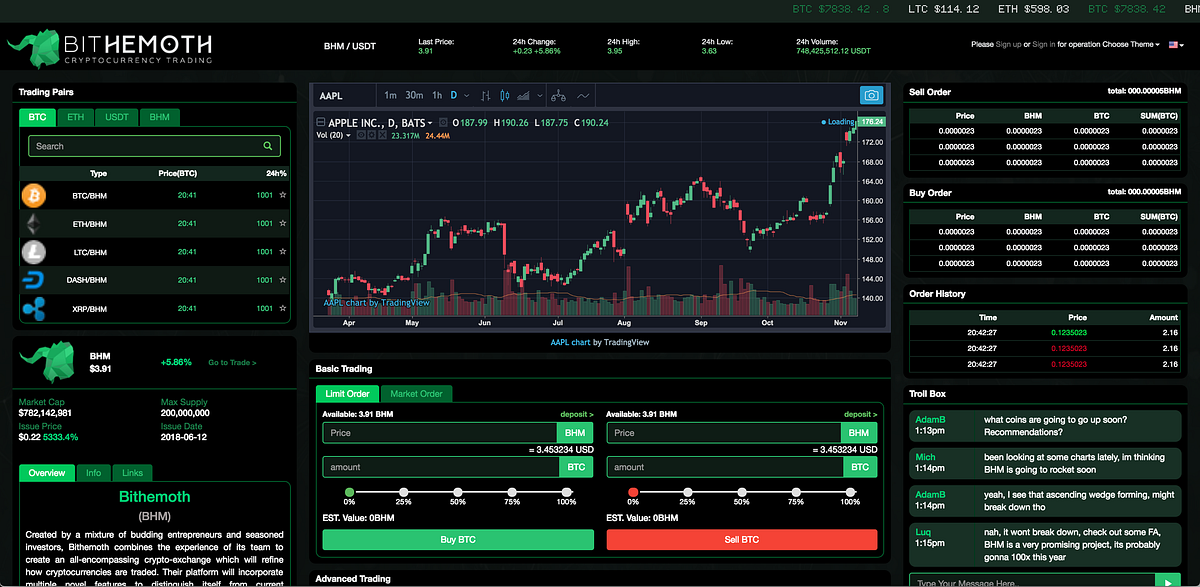
A crypto exchange is a platform where users can buy, sell, or trade cryptocurrencies.
Some exchanges provide custodial services, meaning the platform holds the user’s cryptocurrency while the account is active. Others allow users to connect their own wallets to decentralized trading systems.
Centralized and Decentralized Exchanges
A centralized exchange, often called a CEX, is operated by a company that manages the trading platform and typically provides account-based services.
A decentralized exchange, or DEX, uses blockchain-based smart contracts to facilitate trading without operating in exactly the same way as a traditional centralized exchange.
Each model has different features, risks, and responsibilities.
Beginners should research an exchange’s security practices, regulatory status where applicable, fees, available assets, withdrawal policies, and reputation before using it.
How to Buy Cryptocurrency
The basic process of buying cryptocurrency usually involves creating an account with a suitable platform, completing any required identity verification, depositing funds, selecting an asset, and placing an order.
However, the exact process differs between platforms and countries.
Before purchasing any cryptocurrency, beginners should understand the difference between market orders and limit orders, transaction fees, withdrawal fees, and the risks of price volatility.
The most important principle is to avoid purchasing an asset simply because its price has recently increased.
Crypto Prices
Crypto prices are determined by supply and demand across cryptocurrency markets.
Prices can move rapidly because crypto markets operate continuously. Bitcoin, Ethereum, and altcoins can experience significant movements within hours or even minutes.
Factors influencing prices include market sentiment, trading volume, liquidity, institutional activity, regulatory developments, network upgrades, macroeconomic conditions, and changes in token supply.
Why Crypto Prices Are Volatile
Cryptocurrency markets can be more volatile than many traditional financial markets.
Leverage can amplify price movements because traders using derivatives may face forced liquidations when prices move against their positions.
News can also cause sudden changes in market sentiment. A regulatory announcement, security incident, network upgrade, or major institutional development can influence market expectations.
For beginners, volatility is one of the most important risks to understand.
What Is Crypto Market Capitalization?
Market capitalization provides a way to estimate the total market value of a cryptocurrency.
It is generally calculated by multiplying the current price by the circulating supply.
This explains why a cryptocurrency with a very low individual token price is not necessarily a smaller project than one with a high token price.
Circulating Supply and Tokenomics
Tokenomics refers to the economic design of a cryptocurrency or token.
It can include circulating supply, maximum supply, inflation, token emissions, staking rewards, vesting schedules, token burns,a and utility.
Understanding tokenomics can help beginners evaluate whether a cryptocurrency’s current supply structure could change significantly over time.
What Is Crypto Mining
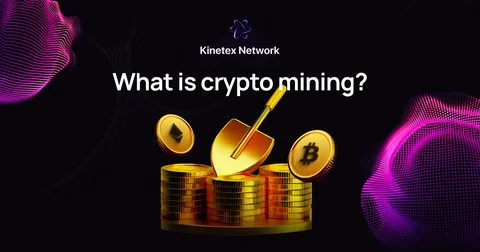
Crypto mining refers to the process used by certain blockchain networks to verify transactions and secure the network.
Bitcoin uses proof of work. Miners use specialized computing equipment to compete for the opportunity to add new blocks to the blockchain.
Successful miners can receive newly issued Bitcoin and transaction fees.
Proof of Work
Proof of work requires participants to perform computational work before a new block can be added.
This system contributes to Bitcoin’s security because changing historical blockchain records would require enormous computational resources.
Not all cryptocurrencies use mining. Ethereum, for example, moved from proof of work to proof of stake in 2022.
What Is Staking?
Crypto staking is associated with proof-of-stake blockchain networks.
Participants can lock or commit eligible cryptocurrency to help support network operations and validation. In return, they may receive rewards according to the network’s rules.
Staking can provide potential rewards, but it also involves risks. These may include token price volatility, lock-up conditions, validator penalties, smart-contract risks, and changes in network economics.
Beginners should understand the specific staking mechanism of a cryptocurrency rather than assuming every staking system works the same way.
What Is DeFi?
Decentralized finance, commonly called DeFi, refers to financial applications built using blockchain technology and smart contracts.
DeFi can include decentralized exchanges, lending platforms, borrowing protocols, derivatives, staking systems, and other financial applications.
Ethereum has historically been a major ecosystem for DeFi, while other blockchain networks have developed their own decentralized financial applications.
DeFi Risks
DeFi can provide innovative financial tools, but it also introduces risks that beginners need to understand.
Smart-contract vulnerabilities, liquidity problems, oracle failures, economic attacks, and highly volatile assets can result in losses.
A high yield should not automatically be interpreted as a safe opportunity. In many cases, higher potential returns come with higher risks.
What Are Stablecoins?
Stablecoins are digital assets designed to maintain a relatively stable value compared with another asset, often a fiat currency such as the U.S. dollar.
Stablecoins are widely used within crypto markets because they can provide a digital representation of relatively stable value for trading and blockchain transactions.
Different stablecoins use different mechanisms to maintain their intended value. Some rely on reserves, while others use crypto collateral or algorithmic mechanisms.
Beginners should research how a stablecoin maintains its value and what assets or mechanisms support it.
Crypto Security for Beginners
Security should be a major priority for anyone entering cryptocurrency.
Common threats include phishing websites, fake investment platforms, malicious wallet applications, fraudulent social-media accounts, fake giveaways, and impersonation scams.
Beginners should carefully verify website addresses and never share private keys or wallet recovery phrases with strangers.
Avoiding Crypto Scams
Scammers often promise guaranteed profits, unrealistic returns, exclusive investment opportunities, or urgent opportunities that require immediate payment.
Cryptocurrency transactions are often difficult or impossible to reverse once confirmed. This makes careful verification particularly important.
A good security habit is to slow down when someone creates urgency or asks for sensitive wallet information.
Crypto Regulation
Crypto regulation varies from one country to another. Governments may establish rules concerning cryptocurrency exchanges, taxation, custody, financial products, anti-money-laundering procedures, and consumer protection.
Regulatory developments can influence cryptocurrency markets because they can affect how businesses and financial institutions interact with digital assets.
Beginners should therefore research the rules that apply in their own jurisdiction before buying, selling, transferring, or earning cryptocurrency.
Common Crypto Terms Beginners Should Know
Understanding cryptocurrency terminology makes it easier to follow market discussions.
Blockchain refers to the distributed ledger used to record transactions. Wallet refers to software or hardware used to manage cryptographic keys. Token generally refers to a digital asset created on an existing blockchain, although terminology varies.
Gas fees are transaction fees associated with certain blockchain networks. Liquidity describes how easily an asset can be traded without substantially affecting its price. Market capitalization estimates the total market value of a cryptocurrency based on its circulating supply.
Understanding these basic terms creates a strong foundation for further cryptocurrency research.
Common Mistakes Made by Crypto Beginners
One of the most common mistakes is buying a cryptocurrency solely because its price has increased rapidly.
Another mistake is investing money without understanding the underlying project or its risks.
Beginners may also underestimate security. Keeping large amounts of cryptocurrency on an unfamiliar platform, sharing recovery phrases, or clicking suspicious links can expose users to serious losses.
Another common error is using excessive leverage. Leverage can magnify both gains and losses and can result in liquidation.
Learning first and acting later can help reduce avoidable mistakes.
How Beginners Can Learn Cryptocurrency
A strong crypto education starts with basic concepts.
Beginners can learn about Bitcoin, blockchain technology, wallets, exchanges, market capitalization, tokenomics, and security before exploring more advanced subjects.
Reading project documentation, studying blockchain explorers, following reputable industry news, and learning how cryptocurrency transactions work can provide valuable practical knowledge.
It is also useful to compare information from multiple reliable sources rather than depending entirely on social-media posts or anonymous online recommendations.
The Future of Cryptocurrency
The cryptocurrency industry continues to develop rapidly.
Blockchain technology is increasingly being explored for payments, stablecoins, decentralized finance, digital identity, tokenization, gaming, and financial infrastructure.
Institutional participation has also expanded the relationship between cryptocurrency and traditional finance.
At the same time, challenges remain. Scalability, regulation, cybersecurity, volatility, user experience, and environmental concerns continue to influence the industry’s development.
The future of cryptocurrency is therefore likely to involve both technological innovation and greater integration with existing financial systems.
Conclusion
Crypto for Beginners does not have to be complicated. By understanding the basic concepts of Bitcoin, Ethereum, blockchain technology, wallets, exchanges, mining, staking, DeFi, stablecoins, tokenomics, and cryptocurrency security, newcomers can build a strong foundation.
Cryptocurrency offers a different approach to digital ownership and financial technology, but it also involves significant risks. Prices can change rapidly, projects can fail, scams can cause losses, and regulations can evolve.
For beginners, education should come before speculation. Understanding how a cryptocurrency works, why it has value, how its supply is structured, where it is traded, and how it can be stored securely provides a much stronger foundation than simply following market hype.
As the digital asset industry continues to evolve, learning the fundamentals of cryptocurrency can help newcomers better understand the opportunities, technologies, and risks shaping the future of blockchain-based finance.
Frequently Asked Questions
What is cryptocurrency for beginners?
Cryptocurrency is a type of digital asset that uses blockchain technology and cryptography. Bitcoin is the best-known example, while Ethereum and thousands of other digital assets make up the broader cryptocurrency ecosystem.
How should a beginner start learning crypto?
A beginner can start by learning Bitcoin, blockchain technology, crypto wallets, exchanges, market capitalization, security, and basic market terminology before exploring more advanced topics.
Is cryptocurrency safe for beginners?
Cryptocurrency involves significant risks, including price volatility, scams, exchange failures, cybersecurity threats, and regulatory uncertainty. Learning security practices is essential.
What is the difference between Bitcoin and Ethereum?
Bitcoin was designed primarily as a decentralized digital currency and monetary network. Ethereum is a programmable blockchain designed to support smart contracts and decentralized applications, with ETH serving as its native cryptocurrency.
What is a crypto wallet?
A crypto wallet is a software or hardware tool used to manage the Crypto for Beginners cryptographic keys associated with blockchain assets. It allows users to interact with their cryptocurrency addresses and authorize transactions.