Hassan malik
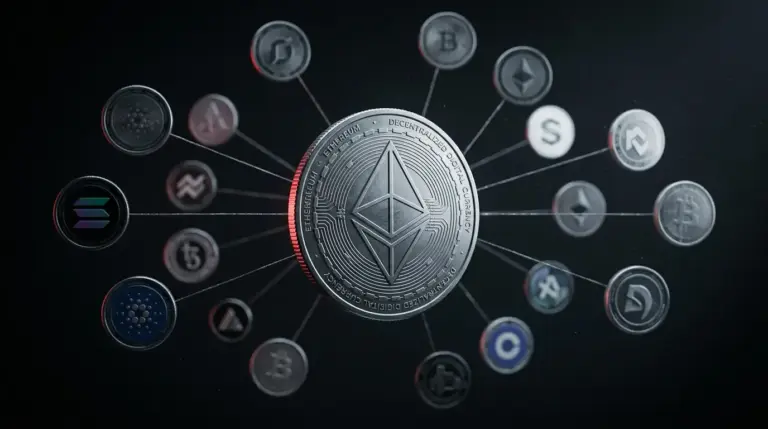
Ethereum remains one of the most important networks in the Ethereum Analysis cryptocurrency industry, combining a programmable blockchain with a large ecosystem of decentralized applications, decentralized finance, stablecoins, tokenized assets, and Layer 2 networks. Unlike cryptocurrencies designed primarily as digital money, Ethereum was built to provide infrastructure for applications that can operate without traditional intermediaries.
For investors, developers, traders, and crypto enthusiasts, Ethereum analysis therefore requires more than simply looking at the ETH price chart. The broader picture includes network activity, staking participation, transaction demand, scalability improvements, institutional interest, market liquidity, regulation, and Ethereum’s continuing technical development.
In September 2026, Ethereum is entering another important stage of its development. The Ethereum roadmap lists Glamsterdam as an upgrade targeted for the fourth quarter of 2026, following the Fusaka upgrade that went live in December 2025. The roadmap emphasizes continued improvements in scalability, security, efficiency, and Layer 2 support.
At the same time, market conditions remain highly dynamic. Recent technical analysis from Reuters noted that Ether had broken above a key resistance area after a period of consolidation, while also identifying lower price levels that traders could watch if momentum weakened.
This Ethereum analysis examines the major factors shaping ETH, including Ethereum price trends, network fundamentals, staking, Ethereum upgrades, Layer 2 scaling, institutional demand, DeFi, risks, and the longer-term outlook.
What Is Ethereum and Why Does It Matter?
Ethereum is a decentralized blockchain network that enables developers to build and operate smart contracts and decentralized applications. Its native cryptocurrency, Ether or ETH, is used within the network for transaction fees, staking, and various applications across the ecosystem.
Ethereum as a Programmable Blockchain
The biggest distinction between Ethereum and many other blockchain networks is its programmability. Developers can deploy smart contracts, which are blockchain-based programs capable of executing predefined instructions without requiring a central authority to manage every transaction.
This functionality created the foundation for the broader Ethereum ecosystem. Decentralized exchanges, lending protocols, NFT platforms, stablecoin applications, gaming projects, and tokenized assets have all used Ethereum or Ethereum-compatible infrastructure.
Because of this, Ethereum analysis should consider the network as both a cryptocurrency and a technology platform.
ETH and the Ethereum Economy
ETH has several roles inside the ecosystem. Users need ETH to pay network fees, while validators can stake ETH to participate in Ethereum’s proof-of-stake consensus system.
The transition to Proof of Stake occurred during The Merge in September 2022. According to Ethereum’s official roadmap, this transition replaced energy-intensive mining with staking-based consensus and reduced Ethereum’s energy consumption by approximately 99.95%.
This structural change remains one of the most important developments in Ethereum’s history because it changed how the network secures itself and how ETH can be used to participate in consensus.
Ethereum Price Analysis in 2026
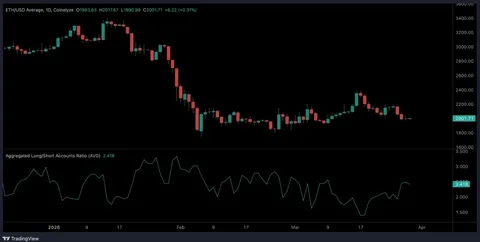
Ethereum price analysis is closely connected to broader cryptocurrency market conditions, but ETH also responds to its own ecosystem developments.
In September 2026, Ether experienced a period of consolidation after a strong rally in late August. Reuters reported that ETH moved above a technical resistance level around $2,661.52 and described a breakout from a bull-flag pattern. The same analysis identified approximately $3,050 as a technical target based on the chart formation, while also highlighting lower levels around $2,560–$2,565 and $2,350–$2,360 as areas traders could monitor if the market reversed.
These levels should not be interpreted as guaranteed future prices. Technical analysis describes patterns and potential scenarios rather than certainty.
Understanding ETH Support and Resistance
Support and resistance are important concepts in Ethereum technical analysis. Support refers to a price region where buying activity has historically appeared, while resistance represents an area where selling pressure has previously increased.
When ETH breaks through resistance with strong volume and sustained demand, traders may interpret the movement as evidence of improving momentum. However, a breakout can also fail if buying pressure weakens.
For this reason, Ethereum analysis should combine chart structures with fundamental information instead of relying on a single indicator.
Market Momentum and Volatility
ETH remains a volatile digital asset. Even when the Ethereum network experiences technological progress, its token price can react negatively to broader macroeconomic conditions, changing liquidity, Bitcoin movements, derivatives positioning, and investor sentiment.
This creates an important distinction between Ethereum network growth and short-term ETH price performance. A technically stronger network does not necessarily mean that its token will rise every day or every month.
Ethereum Network Upgrades and Scalability
One of the most important parts of any long-term Ethereum analysis is the network’s development roadmap.
Ethereum has undergone several major upgrades, including Dencun, Pectra, and Fusaka. Dencun introduced proto-danksharding through EIP-4844, helping reduce the cost of data used by Layer 2 rollups. Pectra introduced improvements including enhanced account functionality and increased validator effective balances. Fusaka introduced PeerDAS and additional improvements to data availability and network capacity.
Glamsterdam and the Next Stage of Ethereum
The Ethereum roadmap currently lists Glamsterdam for Q4 2026. Its planned features include enshrined proposer-builder separation and block-level access lists. These changes are intended to improve Ethereum’s scalability and efficiency while strengthening the network’s architecture.
Ethereum’s official security roadmap explains that enshrined proposer-builder separation is designed to move part of the block-building process into the protocol itself, reducing reliance on external relay infrastructure.
For Ethereum investors and developers, these upgrades matter because scalability and efficiency can influence the network’s ability to support greater application activity.
Ethereum and Layer 2 Scaling
Layer 2 networks have become a central part of Ethereum’s scaling strategy.
Instead of processing every operation directly on Ethereum’s mainnet, Layer 2 networks can process transactions using separate execution environments while relying on Ethereum for important security and settlement functions.
Why Layer 2 Networks Matter
The growth of Ethereum Layer 2 solutions can potentially make transactions faster and cheaper while allowing Ethereum to remain the underlying settlement layer.
Dencun’s blob transactions were specifically designed to make rollup data cheaper. Later improvements, including Fusaka and PeerDAS, continue the broader effort to increase data availability and support Layer 2 scaling.
This creates an interesting factor for Ethereum analysis. Greater Layer 2 adoption can increase the overall Ethereum ecosystem’s capacity, but investors also need to consider how economic activity and value ultimately flow between Ethereum’s base layer, Layer 2 networks, applications, and ETH.
Ethereum Staking Analysis
Staking has become one of the defining characteristics of Ethereum following its transition to Proof of Stake.
Instead of miners competing through energy-intensive computation, Ethereum uses validators who stake ETH to participate in network consensus.
How Ethereum Staking Works
Validators commit ETH to the network and perform responsibilities related to proposing and validating blocks. In return, validators can receive staking rewards, although staking also carries technical, operational, and market risks.
Ethereum’s Shapella upgrade in April 2023 introduced staking withdrawals, allowing validators to withdraw staked ETH and rewards.
Recent market reporting also shows continued attention toward Ethereum’s staking queues. A September 25, 2026 report noted that the amount of ETH waiting to enter staking was substantially larger than the amount waiting to exit, although staking queues should not automatically be interpreted as a direct price signal.
Why Staking Matters for ETH
Staking can influence the available supply of liquid ETH and creates an additional economic use case for the token.
However, staking data should be viewed alongside exchange balances, ETF activity, network demand, macroeconomic conditions, and overall market liquidity. No single metric can reliably determine future ETH price movements.
Ethereum ETFs and Institutional Interest
Another major development in the Ethereum market is the emergence of institutional investment products.
Spot Ethereum ETFs give traditional-market participants another way to obtain exposure to ETH without directly managing a cryptocurrency wallet or interacting with the Ethereum network themselves.
ETF Flows as a Market Indicator
ETF inflows can indicate increased institutional demand, while outflows can indicate reduced exposure or profit-taking. However, ETF flows are not a guaranteed predictor of price.
Recent market data illustrates this complexity. CoinDCX reported that U.S. spot Ether ETFs experienced approximately $140 million in weekly outflows during the week ending September 19, 2026, ending a four-week inflow streak.
For Ethereum analysis, institutional flows therefore provide useful context but should be combined with other market indicators.
Ethereum and Decentralized Finance
Ethereum has played a foundational role in the development of decentralized finance, commonly known as DeFi.
DeFi applications allow users to access financial services such as decentralized trading, lending, borrowing, liquidity provision, and derivatives through blockchain-based protocols.
Ethereum’s DeFi Advantage
Ethereum’s long-established smart contract infrastructure has helped create a large developer and application ecosystem.
The network’s importance is not simply measured by ETH transactions. It is also connected to the applications and assets built around Ethereum. Stablecoins, tokenized assets, decentralized exchanges, lending platforms, and Layer 2 networks all contribute to the broader Ethereum economy.
However, competition remains intense. Other blockchain networks continue to compete for developers, users, liquidity, and application activity.
Ethereum and Stablecoins
Stablecoins represent another important part of Ethereum’s ecosystem.
A stablecoin attempts to maintain a relatively stable value, commonly through reserves or other mechanisms. These assets are widely used for trading, payments, decentralized finance, and transferring value across blockchain networks.
Ethereum has historically been one of the most important environments for stablecoin activity. This creates an additional source of utility because stablecoins can use Ethereum and its Layer 2 ecosystem for settlement and application functionality.
As the digital asset industry expands, stablecoin adoption and tokenized financial assets could remain important themes in Ethereum’s long-term development.
Key Factors That Could Affect Ethereum
A complete Ethereum analysis must examine both positive and negative forces.
Ethereum Network Development
Successful upgrades can improve scalability, efficiency, security, and usability. Ethereum’s roadmap continues to focus on these areas, with Glamsterdam targeted for late 2026 and Hegotá listed for 2027.
However, roadmap dates can change. Ethereum’s own documentation emphasizes that the roadmap represents an evolving plan rather than a fixed schedule.
Institutional Demand
Institutional participation through ETFs and other financial products can affect ETH liquidity and demand. At the same time, institutional flows can move in both directions, meaning positive and negative periods can occur.
Macroeconomic Conditions
Interest rates, inflation expectations, liquidity, bond yields, the U.S. dollar, and broader risk appetite can influence cryptocurrency markets.
When investors become more cautious toward risk assets, cryptocurrencies can experience selling pressure even when their underlying networks continue developing.
Competition
Ethereum faces competition from other smart-contract platforms and Layer 2 ecosystems.
The competitive landscape includes networks that focus on transaction speed, low fees, specialized applications, interoperability, and developer experience. Ethereum’s long-term position will depend partly on whether it can maintain strong developer activity and user demand while improving scalability.
Risks in Ethereum Analysis
Ethereum has substantial technological and economic opportunities, but it also carries risks.
Crypto markets can experience extreme volatility. ETH can rise or fall rapidly in response to market sentiment, leverage, liquidity conditions, regulatory developments, or unexpected events.
There are also technical risks. Smart contracts can contain vulnerabilities, decentralized applications can be exploited, and infrastructure surrounding blockchain networks can fail.
Regulatory uncertainty is another consideration. Changes in cryptocurrency regulations can influence exchanges, financial products, decentralized applications, and institutional participation.
Competition is also a continuing risk. A technically strong network still needs users, developers, liquidity, and sustainable economic activity.
Long-Term Ethereum Outlook
The long-term Ethereum outlook depends on whether the network can continue expanding its utility while improving scalability and user experience.
Ethereum’s roadmap shows a continued focus on scaling, security, decentralization, and efficiency. The development of Layer 2 networks and data availability technology is particularly important because Ethereum’s future architecture increasingly depends on a broader ecosystem rather than simply increasing activity on the main chain.
Security is also receiving continued attention. Ethereum’s official security roadmap discusses proposer-builder separation, censorship resistance, validator resilience, protocol simplification, and preparation for future cryptographic threats.
This means the long-term Ethereum story is not simply about whether ETH reaches a particular price. It is also about whether Ethereum remains an important settlement and application platform as blockchain technology develops.
Ethereum Analysis What Should Investors Watch?
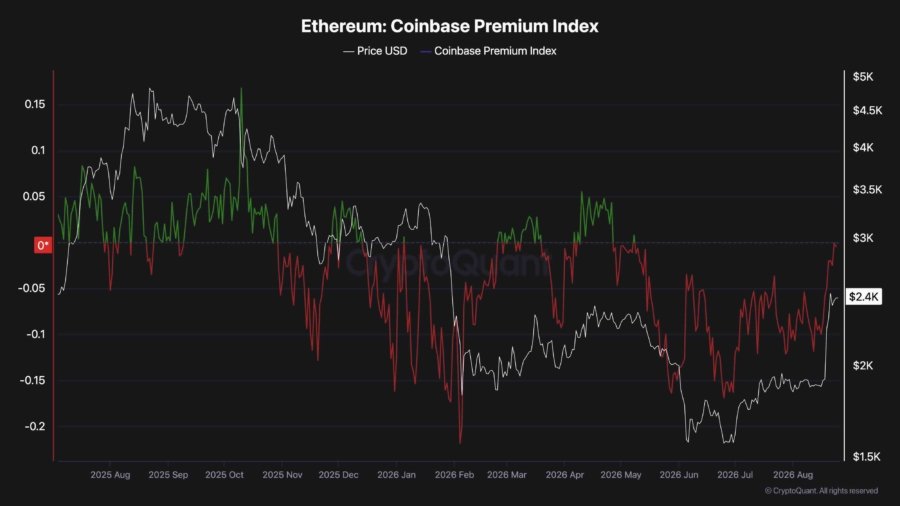
Anyone following Ethereum should pay attention to several interconnected areas rather than relying on one indicator.
ETH price structure can provide information about market momentum. Trading volume can help evaluate the strength of major price movements. ETF flows can provide insight into institutional demand. Staking data can reveal changes in ETH participation and supply dynamics.
Network activity can provide another perspective. Developers, decentralized applications, stablecoins, Layer 2 networks, transaction demand, and data availability all help demonstrate whether Ethereum’s ecosystem is expanding.
Finally, major protocol upgrades should remain on the radar. Technical improvements can influence Ethereum’s competitiveness over time, although the market may react differently to an upgrade depending on expectations and broader economic conditions.
Conclusion
Ethereum analysis in 2026 requires a broader perspective than simply watching the ETH price. Ethereum is simultaneously a cryptocurrency, smart-contract platform, settlement layer, staking network, and foundation for a growing Layer 2 and decentralized application ecosystem.
Current market conditions show why investors should distinguish between short-term technical signals and long-term fundamentals. Recent Reuters analysis identified a breakout above a key resistance level, while other market reports have highlighted ETF outflows and continuing volatility.
At the fundamental level, Ethereum continues to evolve. Its official roadmap lists Glamsterdam for Q4 2026, with additional improvements planned around scalability, block building, security, and efficiency.
The future of ETH will depend on many factors, including adoption, network usage, institutional participation, staking, Layer 2 growth, competition, regulation, and global financial conditions. Rather than relying on a single Ethereum price prediction, understanding these interconnected forces provides a more complete framework for evaluating Ethereum’s market and technological development.
Frequently Asked Questions
What is Ethereum analysis?
Ethereum analysis is the process of examining ETH price trends, technical indicators, network activity, staking, upgrades, market conditions, institutional flows, and other factors that can influence Ethereum’s ecosystem and cryptocurrency market.
What factors affect the Ethereum price?
Ethereum price can be influenced by market liquidity, Bitcoin performance, investor sentiment, institutional flows, network demand, staking activity, macroeconomic conditions, regulation, and developments across the Ethereum ecosystem.
Is Ethereum still being upgraded?
Yes. Ethereum continues to follow an evolving development roadmap. Its official roadmap currently lists Glamsterdam for Q4 2026 and Hegotá for 2027, although development schedules can change.
Why is Ethereum staking important?
Ethereum staking is part of the network’s Proof of Stake consensus mechanism. Validators stake ETH to participate in securing the network and can receive rewards for performing validator duties.
What is the future of Ethereum?
Ethereum’s future will depend on continued adoption, Ethereum Analysis successful technical development, Layer 2 growth, network security, developer activity, institutional participation, competition, and broader cryptocurrency market conditions. No single factor can determine the future price or success of ETH.