Hassan malik
Ethereum remains one of the most important blockchain networks Ethereum Analysis in the digital-asset ecosystem, supporting decentralized applications, smart contracts, decentralized finance, tokenized assets, and a growing collection of Layer 2 networks. Because Ethereum is both a technology platform and a cryptocurrency ecosystem, understanding its direction requires more than simply looking at the ETH price. A useful Ethereum Analysis considers network activity, protocol upgrades, scalability, transaction costs, staking, developer adoption, market structure, and the broader blockchain environment.
In 2026, Ethereum continues to evolve rapidly. Earlier upgrades have already changed the economics and user experience of the network, while the upcoming Glamsterdam upgrade is focused on improving Layer 1 scalability and the way Ethereum processes and verifies blocks. Ethereum’s official roadmap currently lists Glamsterdam as being in testing, with mainnet expected in Q4 2026, although the exact date has not been confirmed. The next milestone listed by ethereum.org is a Sepolia fork scheduled for October 6, 2026.
This makes Ethereum Analysis particularly interesting because the network is moving through a period in which technical development, Layer 2 expansion, institutional interest, and changing fee economics are all interacting. Investors, developers, researchers, and blockchain users therefore need to understand both the opportunities and the risks surrounding Ethereum.
This article examines the major factors that can influence Ethereum’s future, explains important technical developments, and explores what users should understand when evaluating ETH and the Ethereum network.
What Is Ethereum?
Ethereum is a decentralized blockchain designed to execute programmable agreements known as smart contracts. Unlike a blockchain focused primarily on transferring a single digital currency, Ethereum provides a programmable environment where developers can create decentralized applications and digital assets.
The native cryptocurrency of the network is Ether, commonly represented by the ticker ETH. ETH is used within the ecosystem for transaction fees, staking, and other forms of network participation.
The distinction between Ethereum and ETH is important when conducting Ethereum Analysis. Ethereum refers to the blockchain infrastructure and ecosystem, while ETH is the cryptocurrency that powers many activities within that infrastructure.
Ethereum has developed into a major foundation for decentralized finance, non-fungible tokens, stablecoins, tokenized assets, decentralized applications, and Layer 2 scaling networks. Its continued development therefore depends on whether the underlying network can remain secure, decentralized, affordable, and useful as demand increases.
Why Ethereum Analysis Matters
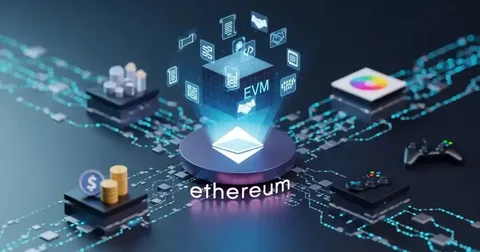
A meaningful Ethereum Analysis should not depend on one metric. Cryptocurrency markets can change quickly, and short-term price movements may not accurately represent the underlying development of a blockchain.
For example, Ethereum can experience periods of relatively low transaction fees while simultaneously undergoing significant technical development. Ethereum’s own 2026 materials describe how Dencun, Pectra, and Fusaka changed costs, wallet capabilities, and scaling infrastructure.
This means an effective analysis needs to consider both the market and the technology.
The ETH price trend is obviously important, but so are network upgrades, developer activity, Layer 2 adoption, staking participation, decentralized application usage, transaction demand, and protocol economics. Looking at these factors together provides a more complete picture.
Ethereum Network Development in 2026
Ethereum has entered 2026 with several major protocol developments already completed. Dencun introduced important improvements for Layer 2 networks, while Pectra and Fusaka continued the network’s evolution.
Ethereum describes Fusaka as a major step in its scaling roadmap. The upgrade introduced Peer Data Availability Sampling, or PeerDAS, designed to support increased blob throughput while maintaining the network’s security model.
These changes are important because Ethereum increasingly functions as a settlement and data-availability layer for other networks. Rather than requiring every transaction from every application to be processed directly on Ethereum’s main execution layer, Layer 2 systems can process activity separately and use Ethereum for security and settlement.
This architecture is central to modern Ethereum scaling.
Ethereum and Layer 2 Scaling
One of the most important developments in Ethereum Analysis is the growth of Layer 2 networks.
Layer 2 solutions are designed to process transactions away from Ethereum’s main execution environment while ultimately relying on Ethereum for security or settlement. Rollups are a particularly important example.
This approach can reduce transaction costs and increase throughput. Ethereum’s roadmap increasingly focuses on improving the underlying infrastructure that supports these networks.
The result is a changing Ethereum ecosystem. Instead of measuring Ethereum solely by the number of transactions directly executed on Layer 1, analysts increasingly need to examine the combined ecosystem of Ethereum, rollups, and related applications.
This creates a more complicated but potentially more scalable blockchain architecture.
The success of this strategy depends on whether Layer 2 networks can provide a smooth user experience while maintaining strong security and interoperability. Ethereum’s 2026 development priorities explicitly include scaling Layer 1, increasing data availability, and improving interoperability and user experience.
Ethereum Gas Fees and Network Economics
Gas fees are another essential component of Ethereum Analysis.
Gas represents the computational resources required to execute transactions and smart contracts. Users pay fees in ETH, with the actual amount depending on network conditions and transaction complexity.
Ethereum’s fee environment has changed significantly compared with the extremely expensive periods experienced during previous market cycles. Ethereum.org reported that by May 2026, standard gas had reached very low levels, with Etherscan showing around 0.15 gwei at one point and daily averages around 0.5 gwei through April.
Lower fees can benefit users and developers because interacting with applications becomes more affordable. However, low fees also create an important economic question for ETH: how does reduced transaction-fee activity affect the network’s fee-burning mechanism and overall supply dynamics?
That relationship makes Ethereum gas fees, ETH supply, network demand, and application usage closely connected.
Ethereum Staking and Network Security
Ethereum changed its consensus mechanism through The Merge, moving from proof-of-work to proof-of-stake in 2022.
Under proof-of-stake, validators participate in securing the blockchain by depositing ETH and following the network’s consensus rules. This makes staking a major part of modern Ethereum.
Staking can therefore be considered from two perspectives. From a network perspective, it contributes to security and decentralized consensus. From an economic perspective, it creates an additional role for ETH beyond simply being a tradable digital asset.
The amount of ETH participating in staking can influence the supply available elsewhere in the ecosystem. However, staking also introduces considerations such as validator responsibilities, withdrawal conditions, technical risks, and changing rewards.
Therefore, Ethereum staking should be evaluated as part of the broader network design rather than treated simply as a source of potential returns.
The Importance of the Glamsterdam Upgrade
The upcoming Glamsterdam upgrade is one of the most important subjects in current Ethereum Analysis.
According to ethereum.org, Glamsterdam is currently in testing and is expected on mainnet during Q4 2026, although no final mainnet date has been confirmed. The next listed milestone is the Sepolia fork on October 6, 2026.
Glamsterdam focuses on scaling Ethereum Layer 1 by changing how transactions are processed and how blocks are created and verified.
Among the important components are enshrined proposer-builder separation, commonly referred to as ePBS, and block-level access lists. Ethereum’s security roadmap identifies ePBS and block-level access lists as major Glamsterdam components.
These developments are technical, but their broader purpose is easier to understand: Ethereum wants to increase capacity without sacrificing the security and decentralized characteristics that make the network valuable.
Successful upgrades can strengthen Ethereum’s infrastructure. At the same time, upgrades introduce implementation and coordination risks, which means development milestones should be monitored rather than automatically treated as guaranteed outcomes.
Ethereum’s Long-Term Scaling Strategy
Ethereum’s scaling strategy has increasingly shifted toward a combination of stronger Layer 1 infrastructure and a large ecosystem of Layer 2 networks.
The Ethereum Foundation stated in its 2026 protocol priorities that the network’s scaling work includes raising the gas limit, increasing blob capacity, improving execution performance, and advancing technologies such as zkEVM infrastructure.
This suggests that Ethereum’s long-term approach is not simply to make Layer 1 handle every transaction directly. Instead, Ethereum is developing an ecosystem in which Layer 1 provides settlement, security, and data availability while additional networks handle large volumes of user activity.
For Ethereum Analysis, this distinction is increasingly important.
The question is not only whether Ethereum Layer 1 can process more transactions. It is also whether Ethereum can successfully coordinate an interconnected ecosystem of rollups, applications, wallets, bridges, and infrastructure providers.
Ethereum’s Developer Ecosystem
Developer activity is another important indicator when evaluating Ethereum.
A blockchain can have a valuable cryptocurrency, but long-term network relevance depends heavily on whether developers continue building useful applications on it.
Ethereum has historically developed a large ecosystem of smart contracts, decentralized applications, development tools, wallets, infrastructure projects, and Layer 2 networks.
The network’s ongoing protocol development also demonstrates that Ethereum remains focused on long-term technical improvement. In September 2026, the Ethereum Foundation outlined longer-term priorities covering scaling, security, privacy, state management, fast finality, zkEVM development, and post-quantum preparation.
This is relevant because blockchain competition is increasingly about infrastructure rather than cryptocurrency branding alone.
Ethereum and Decentralized Finance
Ethereum has played a foundational role in the development of decentralized finance, often abbreviated as DeFi.
DeFi applications use smart contracts to provide financial functions without relying on traditional centralized intermediaries. Examples include decentralized exchanges, lending protocols, stablecoin systems, liquidity applications, and tokenized financial products.
Ethereum’s large developer and application ecosystem has helped make it a major center for DeFi innovation.
However, DeFi also creates risks. Smart contracts can contain vulnerabilities, bridges can become security targets, and applications can experience liquidity or governance problems.
Consequently, DeFi growth should not automatically be interpreted as risk-free network growth. A detailed Ethereum Analysis must consider both adoption and the risks associated with decentralized applications.
Ethereum and Institutional Adoption
Institutional participation has become another major theme surrounding ETH.
Institutional involvement can occur through investment products, custody services, staking-related products, tokenization initiatives, and blockchain infrastructure.
The significance of institutional adoption is that larger financial organizations can potentially bring substantial capital and new users into the Ethereum ecosystem. At the same time, institutional participation can introduce new forms of market concentration and regulatory dependency.
Ethereum’s future therefore depends partly on how effectively it can serve both decentralized applications and increasingly sophisticated financial infrastructure.
Ethereum Price Analysis
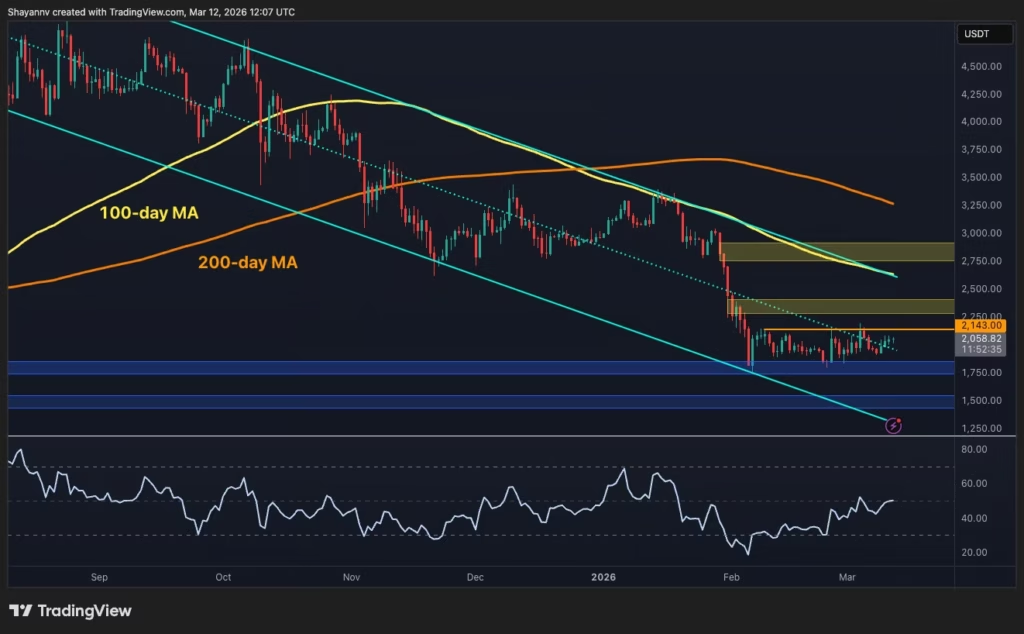
Ethereum price analysis is often the most searched component of Ethereum Analysis, but price should be interpreted carefully.
ETH can experience significant volatility because cryptocurrency markets are influenced by liquidity, market sentiment, macroeconomic conditions, Bitcoin movements, regulatory developments, network activity, and speculative positioning.
Recent September 2026 market reporting showed ETH trading above previous resistance levels during a recovery period, while futures positioning and market flows remained important factors for traders. These observations describe a specific market period rather than guaranteeing a future direction.
Technical analysts commonly examine moving averages, support and resistance levels, trading volume, momentum indicators, and market structure.
However, no technical indicator can guarantee a future price movement. Cryptocurrency markets can invalidate technical patterns rapidly, particularly during periods of high volatility.
For that reason, ETH technical analysis is most useful when combined with fundamental analysis rather than treated as a standalone prediction system.
ETH Supply and Token Economics
Ethereum’s token economics are another major consideration.
ETH does not operate under a simple fixed maximum-supply model like some cryptocurrencies. Its supply is influenced by issuance to validators and the burning mechanism introduced through EIP-1559.
When network activity creates enough fee burning, the amount of ETH destroyed can offset some or all newly issued ETH. When activity is lower, the relationship can change.
This makes Ethereum’s supply dynamics responsive to network usage.
Consequently, ETH tokenomics cannot be understood simply by asking how many coins exist. Analysts should consider issuance, fee burning, staking participation, transaction activity, and broader network demand.
Ethereum Security and Future Risks
Security remains one of Ethereum’s most important long-term priorities.
Ethereum’s roadmap includes work on proposer-builder separation, inclusion mechanisms, protocol simplification, and preparation for potential future cryptographic threats. Ethereum.org also states that post-quantum preparation is already underway, while emphasizing that several components remain in development.
The Ethereum Foundation’s September 2026 protocol priorities go even further, describing a long-term goal of making Ethereum Layer 1 quantum-resistant across its execution, consensus, and data layers by December 2029. The Foundation explicitly notes that this is a self-imposed target and that the underlying timeline for quantum developments remains uncertain.
This illustrates an important principle in Ethereum Analysis: future technological goals should be distinguished from completed network capabilities.
Ethereum Competition
Ethereum operates within an increasingly competitive blockchain environment.
Other networks compete for developers, users, decentralized applications, stablecoin activity, and transaction volume. Some competing blockchains emphasize speed, low transaction costs, specialized applications, or alternative consensus mechanisms.
Ethereum’s response has largely been to improve scalability while maintaining a strong emphasis on decentralization and security.
The outcome of this competition will depend on several factors, including user experience, development activity, transaction costs, liquidity, application quality, interoperability, and network security.
Rather than assuming one blockchain will dominate every use case, it is more useful to examine how Ethereum positions itself within an increasingly multi-chain ecosystem.
Bullish Factors in Ethereum Analysis
Several structural developments can support a constructive long-term interpretation of Ethereum.
The continued development of Layer 2 infrastructure can increase the network’s overall capacity. Protocol upgrades such as Fusaka and the planned Glamsterdam upgrade are designed to improve scalability and efficiency. Ethereum also maintains a large smart-contract ecosystem and continues to invest in account abstraction, interoperability, security, and future cryptographic resilience.
Another important factor is Ethereum’s role as infrastructure. If decentralized applications, stablecoins, tokenized assets, and Layer 2 networks continue expanding around Ethereum, demand for the underlying ecosystem could remain significant.
These factors do not guarantee ETH price appreciation, but they are important fundamentals when evaluating Ethereum’s long-term development.
Bearish Factors and Risks
A complete Ethereum Analysis must also consider negative scenarios.
Competition is one major risk. Faster or cheaper networks could attract developers and users if Ethereum’s improvements do not keep pace.
Another issue is complexity. Ethereum’s ecosystem includes Layer 1, Layer 2 networks, bridges, wallets, smart contracts, staking infrastructure, and decentralized applications. Greater complexity can create additional technical and security challenges.
Low transaction fees can also create an economic challenge because reduced fee revenue can affect the relationship between ETH issuance and ETH burning.
Regulatory uncertainty, market volatility, smart-contract vulnerabilities, liquidity changes, and unsuccessful upgrades are additional risks.
These factors demonstrate why Ethereum should not be evaluated through a single price target or market indicator.
What the Future Could Hold for Ethereum
Ethereum’s future is likely to be shaped by several interconnected trends rather than one single event.
The first is scaling. Ethereum needs to support a growing ecosystem while preserving security and decentralization.
The second is user experience. Account abstraction and interoperability can make blockchain applications easier for ordinary users to interact with.
The third is security. Ethereum’s roadmap increasingly considers long-term threats, including potential cryptographic changes associated with quantum computing.
The fourth is the relationship between Layer 1 and Layer 2 networks. Ethereum’s ability to provide reliable settlement and data availability while allowing other networks to handle high-volume activity will be central to its future architecture.
The fifth is adoption. Technology alone is not enough. Developers, users, businesses, financial institutions, and applications all need reasons to continue using the ecosystem.
How to Read an Ethereum Analysis
Readers should avoid relying on a single statistic when evaluating Ethereum.
A strong analysis combines technical information with fundamental developments. ETH price charts can show market structure, while network data can provide information about usage. Upgrade progress can indicate technological development, while staking and supply statistics can help explain token economics.
It is also important to distinguish between confirmed developments and future plans.
For example, ethereum.org currently describes Glamsterdam as being in testing, with a Q4 2026 mainnet target but no confirmed date. Therefore, an article discussing Glamsterdam should describe it as an upcoming development rather than treating every planned feature as already active on Ethereum mainnet.
This distinction improves the reliability of Ethereum Analysis and prevents readers from confusing expectations with established facts.
Final Thoughts on Ethereum Analysis
Ethereum remains a rapidly developing blockchain whose significance extends far beyond the daily ETH price. Its ecosystem combines smart contracts, decentralized applications, staking, decentralized finance, stablecoins, Layer 2 networks, and increasingly sophisticated scaling infrastructure.
In 2026, the most important developments include the continued impact of previous upgrades, the scaling improvements associated with Fusaka, and the ongoing development of Glamsterdam. Ethereum’s official roadmap currently lists Glamsterdam as being tested, with mainnet expected in Q4 2026 and its next milestone scheduled for the Sepolia testnet.
At the same time, Ethereum’s long-term roadmap includes broader objectives involving scalability, security, privacy, interoperability, account abstraction, and post-quantum preparation.
The most useful Ethereum Analysis therefore looks beyond short-term price movements. ETH market trends matter, but so do developer adoption, network activity, Layer 2 growth, staking, token economics, security, and protocol development.
Ethereum still faces meaningful competition and technical challenges. Its future will depend on how effectively it can scale while preserving the characteristics that have made its ecosystem valuable. For anyone researching Ethereum, understanding these fundamental developments provides a more complete foundation than relying on price predictions alone.
Ultimately, Ethereum is best understood as an evolving Ethereum Analysis blockchain infrastructure platform as well as the home of ETH. Its next stage will be shaped by technological upgrades, application growth, ecosystem adoption, competition, and the network’s ability to balance scalability with security and decentralization.