
 Hassan malik

The cryptocurrency market moves through different phases, and one of the Altcoin Season Explained most discussed phases is altcoin season. During an altcoin season, a broad group of cryptocurrencies other than Bitcoin can experience increased market attention, trading activity, and price momentum. Understanding this phase is important for anyone researching altcoins, altcoin market trends, and the relationship between Bitcoin and the wider cryptocurrency market.
The term “altcoin” generally refers to cryptocurrencies other than Bitcoin. The category includes Ethereum, Layer 1 networks, Layer 2 tokens, decentralized finance assets, gaming tokens, infrastructure projects, meme coins, and many other digital assets. Because these assets have different use cases and market sizes, they do not always move together.
An altcoin season is therefore not simply a period when every altcoin rises. Instead, it describes a market environment in which a significant portion of the altcoin market performs strongly relative to Bitcoin over a particular period.
This distinction is important. Cryptocurrency markets can be extremely volatile, and an increase in altcoin prices does not guarantee that the trend will continue. Some tokens can rise sharply while others remain weak or decline.
In this guide, we will explore Altcoin Season Explained from the ground up, including what altcoin season means, how Bitcoin dominance affects it, the role of market liquidity, common indicators, different stages of crypto market cycles, risks, and how beginners can understand altcoin market behavior.
What Is Altcoin Season?
Altcoin season is a period in which many cryptocurrencies other than Bitcoin outperform Bitcoin over a sustained period.
The phrase is commonly used by traders and crypto analysts to describe a shift in market capital and attention from Bitcoin toward other digital assets.
During a strong altcoin phase, Ethereum and other major cryptocurrencies may attract significant demand. Smaller projects can also experience increased trading activity, although their price movements can be considerably more volatile.
It is important to understand that altcoin season does not have one universally accepted definition. Different analysts use different measurements, including the performance of a basket of altcoins compared with Bitcoin.
Because of this, investors should avoid treating the term as an official market classification.
Why Does Altcoin Season Happen?
Several factors can contribute to an altcoin market becoming stronger.
One important factor is Bitcoin’s market performance. Bitcoin often receives significant attention during the early stages of a crypto-market recovery because it has the largest market capitalization and is generally more established than smaller digital assets.
If Bitcoin establishes a period of relative stability after a strong move, traders may begin looking for opportunities elsewhere.
Capital and attention can then move toward Ethereum, major altcoins, and eventually smaller cryptocurrencies.
This process can create a cycle in which increasing prices attract more attention, which can lead to additional trading activity.
However, market rotations are not guaranteed to follow the same sequence during every cryptocurrency cycle.
Bitcoin’s Role in Altcoin Season
Bitcoin remains central to understanding altcoin season.
Because Bitcoin has historically represented a large portion of total cryptocurrency market capitalization, changes in its market share can affect how investors view the rest of the crypto market.
When Bitcoin experiences a strong rally, investors may initially focus on BTC.
Later, if Bitcoin’s price stabilizes while overall crypto liquidity remains strong, some traders may begin looking for higher-risk opportunities among altcoins.
This can contribute to an increase in altcoin trading.
However, Bitcoin can also rise while altcoins decline. A strong Bitcoin market does not automatically mean that an altcoin season is beginning.
Bitcoin Dominance Explained
Bitcoin dominance measures Bitcoin’s share of the total cryptocurrency market capitalization.
It is commonly calculated by comparing Bitcoin’s market capitalization with the combined market capitalization of cryptocurrencies.
Bitcoin dominance is frequently discussed when analyzing altcoin trends.
A declining Bitcoin dominance percentage can sometimes occur when altcoins are gaining market capitalization faster than Bitcoin.
However, dominance can also change because of stablecoin movements, Ethereum’s price, new token issuance, or changes in the total crypto market.
Therefore, Bitcoin dominance should be treated as one market indicator rather than a standalone signal.
Altcoin Season vs Bitcoin Season
The difference between Bitcoin-focused and altcoin-focused market phases is mainly related to relative performance.
During a Bitcoin-dominant phase, Bitcoin may capture a larger share of market attention and capital.
During a stronger altcoin phase, many other cryptocurrencies may outperform Bitcoin over a particular period.
These phases can change rapidly.
For example, an altcoin rally can lose momentum if Bitcoin suddenly experiences a major correction. Traders may then move capital back toward Bitcoin or stablecoins.
This demonstrates why altcoin market analysis needs to consider the entire cryptocurrency market rather than looking at individual tokens in isolation.
Ethereum’s Role in Altcoin Season
Ethereum often plays an important role in discussions about altcoin season.
Although Ethereum is technically an alternative cryptocurrency to Bitcoin, its market capitalization and ecosystem make it substantially different from many smaller altcoins.
Ethereum supports decentralized applications, smart contracts, decentralized finance, NFTs, tokenized assets, and numerous Layer 2 networks.
When Ethereum experiences strong demand, the broader market can sometimes gain confidence in other cryptocurrency sectors.
Ethereum’s performance can therefore be useful when studying overall crypto-market rotation.
The Role of Market Liquidity
Crypto market liquidity is one of the most important factors behind sustained altcoin movements.
When liquidity increases, more capital can flow through cryptocurrency markets.
Higher liquidity can support trading activity across Bitcoin, Ethereum, and altcoins.
Smaller cryptocurrencies can react strongly to changes in liquidity because their markets are often less deep than Bitcoin’s market.
This means that increased liquidity can produce significant price movements, but it can also make declines more severe when liquidity disappears.
Altcoin Market Capitalization
The total value of cryptocurrencies outside Bitcoin is another useful measurement.
Analysts often examine altcoin market capitalization to understand whether capital is expanding beyond Bitcoin.
When the combined value of altcoins increases, it may indicate stronger demand for alternative digital assets.
However, market capitalization alone does not reveal whether the growth is broad-based.
A small number of large cryptocurrencies can significantly influence total market capitalization.
For this reason, analysts may also examine the performance of individual sectors and groups of cryptocurrencies.
Altcoin Season Indicators
There is no single indicator that can confirm an altcoin season with certainty.
Analysts may examine Bitcoin dominance, Ethereum performance, total altcoin market capitalization, trading volume, liquidity, stablecoin supply, and the relative performance of different cryptocurrency sectors.
The Altcoin Season Index is another metric frequently referenced by crypto traders. It attempts to measure how many major cryptocurrencies have outperformed Bitcoin over a specific period.
Such indexes can be useful for market context, but their methodology and thresholds can differ.
Users should understand how an indicator is calculated before relying on it.
Altcoin Season Index
The Altcoin Season Index is designed to help identify whether market performance is currently more favorable to altcoins or Bitcoin.
Different versions of the index use different baskets of cryptocurrencies and measurement periods.
A high reading generally indicates that many tracked altcoins have outperformed Bitcoin.
A low reading suggests stronger relative Bitcoin performance.
The index should not be interpreted as a guaranteed signal that altcoin prices will continue rising.
Market conditions can change quickly, particularly when Bitcoin experiences large price movements.
Altcoin Trading Volume
Altcoin trading volume can provide important information about market participation.
When an altcoin rises while trading volume increases, it may indicate stronger market activity.
A price increase accompanied by very low volume can sometimes be less convincing because fewer participants are involved.
Volume should always be considered alongside liquidity and market capitalization.
Small-cap cryptocurrencies can show dramatic percentage increases because their markets are relatively thin.
That same characteristic can also create significant downside risk.
Altcoin Market Cycles
Cryptocurrency markets often move through cycles involving accumulation, expansion, correction, and consolidation.
Altcoins can behave differently during each stage.
During early recovery periods, larger cryptocurrencies may attract most of the capital.
As confidence grows, investors may explore additional sectors and smaller assets.
During a late-stage speculative period, some low-cap tokens can experience extreme price increases.
Eventually, excessive speculation can result in sharp corrections.
These patterns are not guaranteed to repeat in exactly the same way, but they provide a useful framework for understanding historical crypto market cycles.
Large-Cap Altcoins
Large-cap altcoins generally have higher market capitalizations and greater liquidity than smaller projects.
Ethereum is one of the most prominent examples.
Other large cryptocurrencies can include major Layer 1 and infrastructure projects.
Large-cap assets may experience lower percentage volatility than smaller tokens, although they can still experience substantial price changes.
Their larger markets can make them an important part of broader altcoin analysis.
Mid-Cap Altcoins
Mid-cap cryptocurrencies generally sit between large established assets and smaller projects.
These assets can attract traders seeking greater growth potential than the largest cryptocurrencies.
However, increased potential volatility also creates greater risk.
Market liquidity, token economics, development activity, adoption, and competitive positioning can become particularly important when evaluating mid-cap assets.
Small-Cap Altcoins
Small-cap cryptocurrencies can experience extremely large percentage movements.
Their relatively low market capitalization means that comparatively small amounts of capital can sometimes have a noticeable effect on price.
This can create significant opportunities for speculation, but it can also increase the possibility of sharp losses.
Small-cap tokens may have limited liquidity, wider spreads, and greater susceptibility to sudden market sentiment changes.
For beginners, understanding these characteristics is essential before analyzing small-cap altcoin prices.
Meme Coins During Altcoin Season
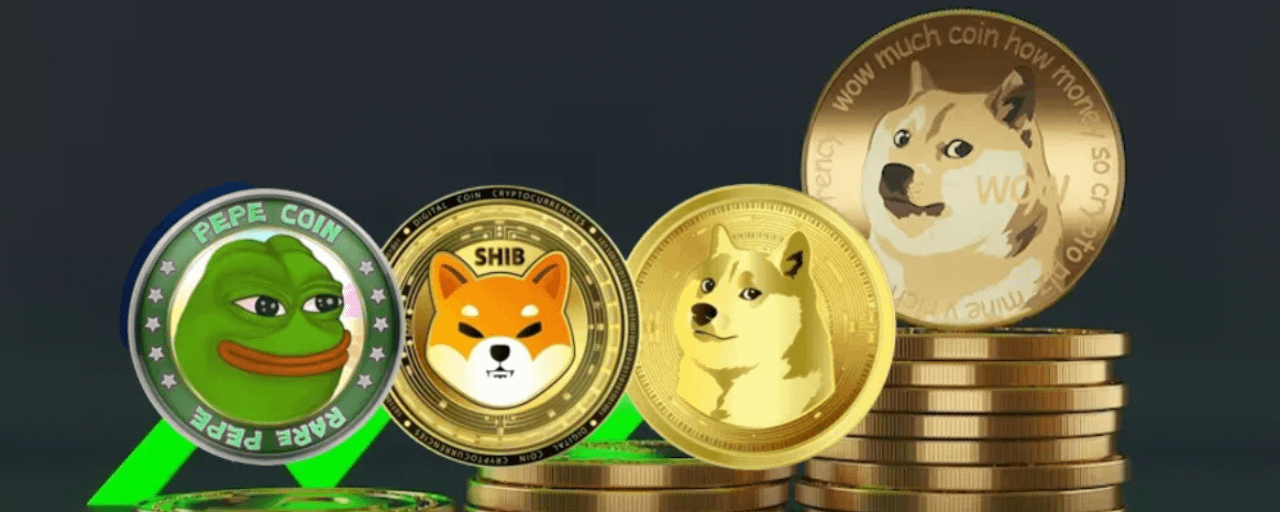
Meme coins can become particularly popular during periods of strong retail speculation.
Unlike many utility-focused cryptocurrencies, meme coins often depend heavily on community interest, cultural trends, social media activity, and speculation.
During a strong crypto rally, meme coins can experience rapid increases in trading activity.
However, their prices can also decline just as quickly.
A meme-coin rally should therefore not automatically be interpreted as proof of a healthy or broad-based altcoin market.
DeFi Tokens and Altcoin Season
DeFi tokens represent another major category of the altcoin market.
Decentralized finance projects aim to provide financial services through blockchain-based protocols.
During periods of increased DeFi activity, tokens connected to decentralized exchanges, lending protocols, liquid staking, and other applications can attract attention.
The performance of DeFi tokens can provide information about whether market activity is expanding into specific blockchain applications.
However, token prices can remain volatile even when the underlying protocol is experiencing strong usage.
Layer 1 and Layer 2 Tokens
Layer 1 cryptocurrencies operate on their own blockchain networks, while Layer 2 networks are designed to operate on top of an existing blockchain infrastructure.
These sectors can become important during altcoin market expansions.
Investors may focus on transaction activity, developer adoption, network usage, fees, scalability, and ecosystem growth when researching these projects.
The growth of a blockchain ecosystem does not necessarily guarantee that its associated token will increase in price.
Fundamental research and market analysis remain important.
How Altcoin Season Can Affect Crypto Prices
During a broad altcoin rally, demand can spread across multiple sectors.
Higher demand may increase trading volumes and market capitalization.
Some investors may rotate from Bitcoin into larger altcoins, followed by smaller and more speculative assets.
This process can create rapid increases in altcoin prices.
However, price increases can also become disconnected from fundamentals during periods of excessive speculation.
When sentiment changes, highly speculative assets may experience significant corrections.
Altcoin Season and Market Sentiment
Crypto market sentiment plays a major role in altcoin behavior.
When investors feel confident about the market, they may become more willing to accept risk.
This can increase demand for assets with smaller market capitalizations.
When fear returns, investors may move toward Bitcoin, stablecoins, or cash.
Because sentiment can change quickly, altcoin season can end suddenly.
Monitoring sentiment alongside price and volume can therefore provide additional market context.
Risks During Altcoin Season
Altcoin markets can be considerably more volatile than Bitcoin.
One important risk is liquidity.
A token can rise quickly when demand is strong but experience a major decline when buyers disappear.
Another risk is project quality.
The cryptocurrency market contains thousands of tokens, and they differ significantly in technology, development, adoption, token economics, and transparency.
There is also a risk of scams, manipulated markets, and projects that fail to deliver their stated objectives.
Research is therefore particularly important during periods of intense speculation.
Common Altcoin Season Mistakes
One common mistake is assuming that every cryptocurrency will rise during an altcoin season.
Market performance is rarely uniform.
Another mistake is buying an asset simply because it has already increased significantly.
Rapid price appreciation can increase volatility and the possibility of sharp corrections.
Some traders also ignore liquidity and market capitalization.
A token with a small market can move dramatically in either direction.
Finally, relying entirely on social media trends can lead to decisions based on incomplete information.
How Beginners Can Understand Altcoin Season
Beginners should first understand the overall cryptocurrency market before focusing on individual altcoins.
Bitcoin’s trend is important because BTC can strongly influence overall market sentiment.
Ethereum’s performance can also provide useful information about broader cryptocurrency demand.
Bitcoin dominance, altcoin market capitalization, trading volume, liquidity, and sector performance can then provide additional context.
Rather than focusing on one indicator, beginners can study how several measurements interact.
This approach can make Altcoin Season Explained easier to understand without relying on complicated trading systems.
Altcoin Season and Risk Management
Risk management becomes particularly important during highly speculative market phases.
Altcoins can produce large gains, but they can also experience significant losses.
A disciplined approach includes understanding volatility, avoiding excessive leverage, researching projects, and considering liquidity before trading.
Investors should also understand that past altcoin rallies do not guarantee future results.
Market conditions, regulations, technology, liquidity, and investor behavior can all change.
Is Every Altcoin Season the Same?
No.
Every crypto market cycle develops under different economic and technological conditions.
Previous cycles were influenced by factors that may not be present today.
The growing role of ETFs, institutional investors, stablecoins, decentralized finance, tokenization, and regulatory changes can alter how capital moves through the market.
Therefore, historical altcoin seasons can provide context but should not be treated as an exact template for future markets.
The Future of Altcoin Season
The concept of altcoin season may continue to evolve as the cryptocurrency industry develops.
The market now contains many different sectors, including artificial intelligence, decentralized finance, Layer 1 networks, Layer 2 networks, gaming, tokenized real-world assets, stablecoins, and infrastructure projects.
Instead of capital moving uniformly into all altcoins, future market cycles may involve more sector-specific rotations.
This could make traditional definitions of altcoin season less precise.
Investors may increasingly analyze individual sectors rather than treating all alternative cryptocurrencies as one market.
Conclusion
Altcoin Season Explained is ultimately about understanding relative performance across the cryptocurrency market.
An altcoin season generally describes a period when a broad group of cryptocurrencies outside Bitcoin outperform BTC. Bitcoin dominance, Ethereum performance, altcoin market capitalization, trading volume, liquidity, market sentiment, and sector activity can all provide useful information when studying this phenomenon.
However, altcoin season does not mean that every token will rise.
Different cryptocurrencies have different market capitalizations, liquidity levels, technologies, use cases, communities, and risks. Large-cap assets can behave very differently from small-cap tokens, while meme coins and DeFi projects can respond to completely different market drivers.
For beginners, understanding the relationship between Bitcoin and altcoins is an important starting point. Studying market cycles, Bitcoin dominance, volume, liquidity, and project fundamentals can provide a stronger foundation for understanding cryptocurrency markets.
Most importantly, altcoin season should be viewed as a market condition rather than a guaranteed opportunity. Crypto markets remain volatile, and historical patterns cannot guarantee future performance.
Frequently Asked Questions
What is altcoin season?
Altcoin season is a period when a broad group of cryptocurrencies other than Bitcoin outperform BTC over a specific period.
How can you identify altcoin season?
Analysts commonly examine Bitcoin dominance, altcoin market capitalization, Ethereum performance, trading volume, liquidity, and indexes designed to compare altcoin performance with Bitcoin.
Does every altcoin rise during altcoin season?
No. Altcoin performance varies significantly. Some cryptocurrencies may rise strongly while others remain flat or decline.
What role does Bitcoin dominance play?
Bitcoin dominance measures Bitcoin’s share of total cryptocurrency market capitalization. Changes in dominance can provide context about the relative performance of Bitcoin and altcoins.
Is altcoin season good for beginners?
Altcoin markets can be highly volatile. Beginners should understand market cycles, liquidity, project fundamentals, and risk management before trading or investing in individual altcoins.
What happens after altcoin season?
There is no fixed outcome. The market can enter a correction, return to Bitcoin-focused trading, consolidate, or move into another phase depending on liquidity, sentiment, and broader market conditions.
Are meme coins part of altcoin season?
Meme coins are generally considered altcoins, and they can experience Altcoin Season Explained increased activity during speculative market phases. Their prices can also be particularly volatile.

 admin