
 Hassan malik
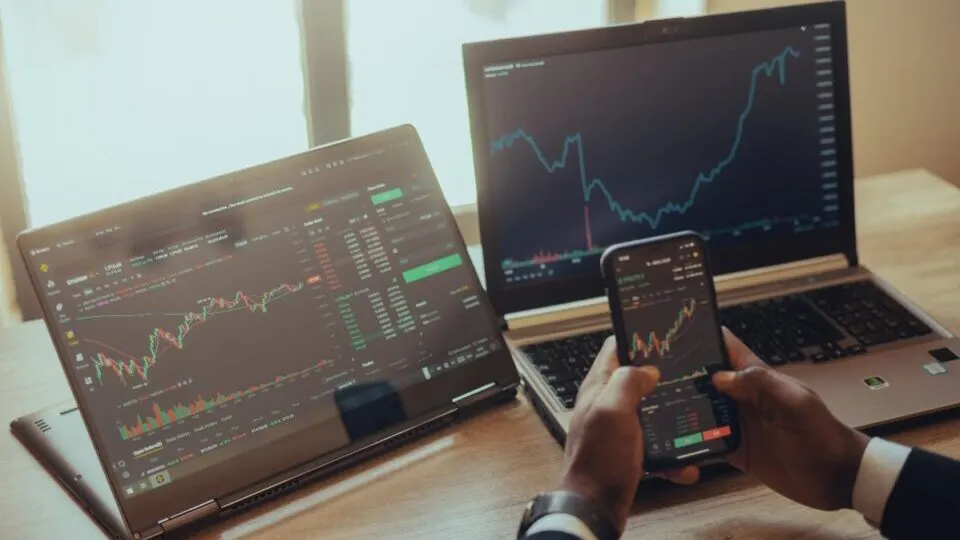
Trading Platforms have become a central part of the cryptocurrency ecosystem. Trading Platforms They provide the infrastructure that allows users to buy, sell, exchange, and manage digital assets such as Bitcoin, Ethereum, stablecoins, and altcoins. For beginners, however, the large number of available platforms can make the crypto market difficult to understand.
A trading platform can offer much more than a simple buy-and-sell button. Depending on the service, users may find spot trading, advanced charts, market and limit orders, trading pairs, wallets, deposits and withdrawals, derivatives, staking services, portfolio tools, and access to decentralized markets.
The cryptocurrency industry generally includes centralized exchanges, decentralized exchanges, and peer-to-peer marketplaces. Centralized exchanges normally operate through a company that manages the platform and often holds customer assets. Decentralized exchanges, or DEXs, allow users to interact with blockchain-based systems and generally trade directly from compatible wallets. The IMF identifies centralized, peer-to-peer, and decentralized exchanges as three major categories of crypto exchanges.
Understanding these differences is important before using any crypto trading platform. Fees, liquidity, security, custody, supported assets, withdrawal rules, and regulatory requirements can vary considerably. A platform that works well for one type of user may not provide the same experience for another.
This guide explains how trading platforms work, the difference between CEXs and DEXs, trading fees, liquidity, order types, security, wallets, risk management, and important considerations for crypto users.
What Are Trading Platforms?
A trading platform is a digital service that provides access to financial markets. In cryptocurrency, these platforms allow users to exchange digital assets or interact with blockchain-based markets.
On a centralized exchange, users normally create an account and deposit funds before trading. The platform maintains an internal order book and matches buyers with sellers. The IMF describes centralized exchanges as platforms that manage order books and generally take custody of users’ crypto assets.
Decentralized platforms operate differently. A DEX can use smart contracts, liquidity pools, automated market makers, or on-chain order books to facilitate transactions. Users typically connect a self-custody wallet rather than depositing assets into a traditional exchange account.
Modern platforms can also combine these approaches. For example, some centralized services now provide access to selected decentralized markets through integrated wallet and DEX functionality.
Centralized Trading Platforms
How Centralized Exchanges Work
Centralized exchanges, commonly called CEXs, are operated by companies or organizations that provide trading infrastructure.
A user generally creates an account, completes any required verification, deposits funds, and then places trades through the exchange interface. The exchange maintains the trading system and records balances internally.
This structure can make centralized platforms relatively straightforward for beginners. Users can access charts, trading pairs, order books, account balances, and transaction histories through one interface.
Centralized exchanges can also provide a broad range of products. Depending on the platform and jurisdiction, these can include spot markets, derivatives, staking, recurring purchases, and other services.
Benefits and Considerations
One important feature of centralized platforms is liquidity. Large exchanges can have substantial numbers of buyers and sellers, potentially making it easier to execute trades.
They can also provide customer-support systems and account-recovery procedures that may be easier for beginners than managing a self-custody wallet.
However, centralized platforms involve a custodial relationship. Users generally do not directly control the private keys associated with assets held by the exchange. This introduces counterparty and platform risks. The IMF notes that centralized exchanges generally take custody of users’ crypto assets and private-key control.
Decentralized Trading Platforms

What Is a DEX?
A decentralized exchange, or DEX, is a blockchain-based marketplace that allows users to trade cryptocurrencies directly through decentralized infrastructure.
Coinbase describes DEXs as peer-to-peer marketplaces where transactions occur directly between crypto traders, with popular examples operating on networks such as Ethereum.
Instead of creating a traditional exchange account and depositing assets, users normally connect a compatible self-custody wallet. The wallet authorizes transactions, while smart contracts execute the relevant trading process.
DEX Liquidity Pools
Many decentralized exchanges use automated market makers, or AMMs. Instead of matching buyers and sellers through a conventional order book, these systems can use liquidity pools containing cryptocurrency pairs.
Liquidity providers contribute assets to these pools according to the protocol’s rules. Traders then interact with the pool when swapping one asset for another.
Other DEXs use order books or aggregation systems. DEX aggregators can bring liquidity from multiple decentralized exchanges together to help users access different trading sources.
CEX vs. DEX
The difference between centralized and decentralized trading platforms largely comes down to control, infrastructure, and user responsibility.
A centralized exchange generally provides a company-managed account and custody system. A DEX generally allows users to retain control of their assets through a self-custody wallet.
Centralized platforms can provide easier account recovery, customer support, and familiar interfaces. DEXs can provide direct blockchain access and self-custody.
Neither model removes all risks. Centralized platforms involve custodial risk, while DEX users face risks involving private keys, smart contracts, token approvals, blockchain transactions, and potentially fraudulent or illiquid tokens.
The choice therefore depends on the user’s needs, technical understanding, jurisdiction, and preferred custody model.
Understanding Trading Liquidity
Liquidity refers to how easily an asset can be bought or sold without causing a substantial change in its price.
Highly liquid markets generally have many active participants and sufficient buy and sell orders. Lower-liquidity markets can experience wider spreads and greater price impact.
For example, purchasing a large amount of a highly traded cryptocurrency may have relatively limited price impact, while placing the same order in a thinly traded altcoin could move the market substantially.
Liquidity is particularly important when evaluating smaller cryptocurrencies. A platform may list hundreds or thousands of assets, but that does not mean every trading pair has deep liquidity.
Trading Fees and Spreads
Fees are an important part of comparing Trading Platforms.
Platforms can charge trading fees, withdrawal fees, deposit fees, conversion fees, or other service charges. The exact structure varies between providers.
Some centralized exchanges use maker-and-taker models. A maker adds liquidity to the order book, while a taker generally executes against an existing order.
DEX transactions can involve different costs, including network or gas fees, liquidity-provider fees, and platform-specific charges.
The displayed trading fee is not always the complete cost. Traders should also consider the spread, slippage, withdrawal charges, and blockchain transaction costs.
For example, Coinbase states that its DEX trading can involve service fees and network-related costs, and that the final execution price can differ from the displayed estimate depending on execution and slippage.
Understanding Crypto Order Types
Market Orders
A market order is designed to execute at the best available prices in the market when the order is submitted.
Market orders can be convenient when immediate execution is more important than controlling the exact execution price. However, the final price can differ from expectations, particularly during periods of high volatility or low liquidity.
Limit Orders
A limit order allows a trader to specify the price at which they are willing to buy or sell.
For example, someone can place a limit order to purchase an asset only if it reaches a specified price. The order may remain open until it is filled, canceled, or expires according to platform rules.
Limit orders provide greater price control, but there is no guarantee that the order will execute.
Stop and Conditional Orders
Some advanced trading platforms provide stop orders and other conditional order types.
These orders can be designed to activate when an asset reaches a specified price or condition. The exact mechanics differ between platforms, so users should understand the platform’s documentation before using them.
Spot Trading Platforms
Spot trading involves buying and selling the underlying cryptocurrency rather than a derivative contract.
For example, a user can purchase BTC on a spot market and hold the resulting Bitcoin balance in an exchange account or transfer it to a compatible wallet.
Spot trading is generally easier for beginners to understand than leveraged derivatives because it does not require the same concepts of margin, liquidation, and funding rates.
Understanding spot markets can provide a useful foundation before studying more complex cryptocurrency trading products.
Futures and Derivatives Trading
Some Trading Platforms offer futures, perpetual contracts, options, and other derivatives.
Derivatives allow traders to gain exposure to cryptocurrency prices without necessarily holding the underlying asset in the same way as spot trading.
Many derivatives products support leverage. Leverage increases the size of a position relative to the trader’s initial capital, which can magnify both gains and losses.
Liquidation is another important concept. If a leveraged position moves sufficiently against the trader, the platform may close the position automatically according to its margin rules.
Because of these risks, derivatives require a deeper understanding of margin, leverage, funding rates, liquidation prices, and position sizing.
Peer-to-Peer Trading Platforms
Peer-to-peer trading connects cryptocurrency buyers and sellers directly through an online marketplace.
P2P platforms can support different payment methods and may use escrow mechanisms to reduce certain transaction risks.
The user experience can be different from a traditional exchange because buyers and sellers may communicate directly within the platform.
Security remains important. Users should follow the platform’s transaction procedure and avoid moving payments outside the official system. Fake payment confirmations and social-engineering attempts are common risks in peer-to-peer environments.
Crypto Wallets and Trading Platforms
Wallets are closely connected to cryptocurrency trading.
A centralized exchange normally provides an exchange-controlled wallet structure, while a DEX generally requires a user to connect a self-custody wallet.
Self-custody means that the user controls the private keys. This can provide greater direct control but also increases personal responsibility.
If a user loses a recovery phrase or signs a malicious transaction, there may be no centralized company capable of reversing the resulting blockchain transaction.
Coinbase similarly explains that self-custody wallets give users control of their private keys and place responsibility for securing recovery information on the user.
Security on Trading Platforms
Security should be one of the first things users examine when researching a trading platform.
Strong account security can include unique passwords, available multi-factor authentication, withdrawal protections, device monitoring, and careful management of API keys.
Users should also be cautious about phishing attacks. Fake websites, emails, social-media accounts, and customer-support messages can attempt to obtain login information or wallet credentials.
Private keys and recovery phrases should never be casually shared.
DEX users have additional responsibilities because connecting a wallet to an unknown application or approving a malicious token contract can create significant risks.
Regulatory Considerations
The regulatory environment surrounding cryptocurrency trading platforms varies between countries and continues to develop.
In Pakistan, the Pakistan Virtual Assets Regulatory Authority (PVARA) states that the Virtual Assets Act 2026 established a framework for licensing and supervising virtual asset service providers. PVARA says VASPs must obtain the appropriate authorization before offering regulated services in Pakistan.
The State Bank of Pakistan has also published updated instructions following the Virtual Assets Act 2026, including provisions concerning bank accounts for entities that hold the relevant PVARA authorization.
Because rules and platform availability can change, users should verify the current regulatory status and availability of any service before depositing funds.
How to Choose a Trading Platform
Choosing a platform involves more than looking at popularity.
Users can examine security, liquidity, trading fees, withdrawal costs, supported assets, payment methods, customer support, account protections, and custody arrangements.
Geographic availability is also important. A platform may offer certain services in one country but restrict them in another.
Users should read the platform’s official terms and fee information and confirm whether the services they want are actually available in their jurisdiction.
It is also useful to understand whether assets are held by the platform or controlled directly through a self-custody wallet.
Trading Platforms for Beginners
Beginners may benefit from starting with simple spot markets and learning basic order types before exploring derivatives or advanced DeFi products.
The most important concepts to understand include market orders, limit orders, spreads, liquidity, trading fees, deposits, withdrawals, wallets, and security.
A beginner should also understand that a convenient interface does not eliminate market risk. Cryptocurrency prices can change rapidly, and losses are possible even when a platform itself operates normally.
Learning how the platform works before committing significant funds can reduce avoidable mistakes.
Advanced Trading Features
More experienced users may look for advanced charting tools, technical indicators, API access, automated strategies, portfolio analytics, and advanced order types.
Institutional platforms can also provide tools for multi-venue execution and liquidity aggregation. Coinbase Prime, for example, describes technology that can aggregate liquidity across multiple venues and use smart order routing for institutional trading.
These tools can improve execution and workflow, but they also introduce additional complexity.
Automation should therefore be treated as a technical tool rather than a guarantee of trading success.
Trading Platforms and DeFi
Decentralized finance has expanded the concept of cryptocurrency trading beyond conventional exchanges.
Users can interact with decentralized applications for swapping tokens, providing liquidity, lending, borrowing, and other blockchain-based financial activities.
DEXs are a major part of this ecosystem because they allow users to interact with decentralized liquidity directly from compatible wallets. Coinbase’s current DEX information also notes that decentralized assets can carry different risks because they may not go through the same review process as assets listed on a centralized exchange.
For beginners, DeFi should be approached carefully because it requires an understanding of wallets, smart contracts, network fees, slippage, token approvals, and blockchain transactions.
Common Trading Platform Mistakes
One common mistake is choosing a platform only because it advertises low trading fees. The overall cost can also depend on spreads, liquidity, withdrawal charges, and execution quality.
Another mistake is keeping large amounts of cryptocurrency on an exchange without understanding custodial risk.
Users can also make costly errors by selecting the wrong blockchain network when withdrawing assets. A compatible address is not enough if the sending and receiving networks do not support the same asset transfer.
Another common mistake is using excessive leverage without understanding liquidation risk.
Finally, users should avoid relying entirely on social-media recommendations. A platform’s reputation, regulatory status, security practices, and official documentation deserve direct examination.
Future of Trading Platforms
The cryptocurrency trading industry continues to evolve.
Centralized exchanges are adding more blockchain-based services, while decentralized platforms are improving user interfaces, liquidity aggregation, and execution systems.
The distinction between CEX and DEX infrastructure is also becoming less rigid. Some centralized platforms now integrate decentralized trading directly into their applications, giving users access to both centralized and on-chain markets. Coinbase, for example, currently describes access to both centralized exchange assets and DEX assets through its products.
This development could make cryptocurrency trading more interconnected across centralized and decentralized systems.
At the same time, regulation, security, transparency, consumer protection, and market integrity are likely to remain important considerations for the industry.
Final Thoughts on Trading Platforms
Trading Platforms provide the infrastructure that connects users to cryptocurrency markets. Centralized exchanges generally emphasize convenience, account-based services, liquidity, and custody, while decentralized exchanges emphasize self-custody and direct interaction with blockchain-based systems.
Neither model removes risk. Centralized platforms introduce custodial and counterparty considerations, while decentralized platforms place greater responsibility on users for wallet security, transaction approvals, smart contracts, and private keys.
For beginners, understanding the basics of crypto exchanges, spot trading, market and limit orders, liquidity, fees, wallets, and security is an important starting point.
Before using a platform, users should investigate its available services, fees, security practices, supported countries, asset availability, withdrawal rules, and applicable regulations.
The cryptocurrency industry continues to develop rapidly, so information about individual platforms can change. Checking official documentation and current regulatory information is therefore essential before making financial decisions.
Frequently Asked Questions
What are Trading Platforms in cryptocurrency?
Trading Platforms are digital services that allow users to buy, sell, exchange, or manage cryptocurrency. They can include centralized exchanges, decentralized exchanges, and peer-to-peer marketplaces.
What is the difference between a CEX and a DEX?
A CEX is operated by a centralized organization and generally manages customer accounts and custody. A DEX uses blockchain-based infrastructure and generally allows users to trade through self-custody wallets.
What should beginners look for in a crypto trading platform?
Beginners can examine security, liquidity, trading fees, withdrawal costs, supported assets, payment methods, custody arrangements, customer support, and availability in their country.
Are crypto Trading Platforms safe?
Safety varies by platform and by how users manage their accounts. Centralized exchanges involve custodial risk, while decentralized trading introduces risks involving private keys, smart contracts, token approvals, and blockchain transactions.
What is a DEX?
A DEX, or decentralized exchange, is a blockchain-based marketplace where users can trade crypto directly through decentralized infrastructure and compatible wallets.
Are crypto exchanges regulated in Pakistan?
Pakistan has established a legal framework for virtual assets through the Virtual Trading Platforms Assets Act 2026 and PVARA’s regulatory framework. PVARA states that virtual asset service providers must obtain the appropriate authorization before providing regulated services in Pakistan.