Hassan malik

Entering the cryptocurrency world can feel Crypto for Beginners confusing at first. Terms such as blockchain, Bitcoin, Ethereum, digital wallets, private keys, exchanges, tokens, and decentralized finance can make crypto seem more complicated than it really is. For anyone searching for crypto for beginners, the most important first step is understanding the basic ideas before thinking about buying or trading digital assets.
Cryptocurrency is a form of digital asset that uses cryptographic technology to secure transactions and ownership. Unlike traditional currencies that are generally issued and controlled by governments and central banks, many cryptocurrencies operate through decentralized computer networks. Transactions can be recorded on a blockchain, a type of distributed digital ledger designed to maintain a shared record of activity.
The cryptocurrency market has developed into a broad ecosystem containing thousands of digital assets, blockchain networks, applications, and financial services. Bitcoin introduced the concept of decentralized digital money on a large scale, while later blockchain platforms expanded the technology into areas such as smart contracts, decentralized applications, digital collectibles, and decentralized finance.
For beginners, however, there is no need to understand every part of the industry immediately. A strong foundation starts with learning what cryptocurrency is, how blockchain technology works, how people store digital assets, how transactions happen, and what risks are involved. This guide explains those fundamentals in straightforward language so newcomers can approach the subject with a clearer understanding.
What Is Cryptocurrency?
Cryptocurrency is a digital asset that uses cryptography and blockchain technology to record and verify transactions. Instead of relying entirely on a central institution to maintain ownership records, many cryptocurrency systems use networks of computers that collectively validate and record activity.
The word cryptocurrency combines “crypto,” referring to cryptographic techniques, with “currency,” reflecting the original idea of creating a form of digital money. However, not every cryptocurrency is primarily used as everyday money. Some digital assets are designed to support blockchain networks, while others represent utility, governance, or access to specific applications.
How Cryptocurrency Differs From Traditional Money
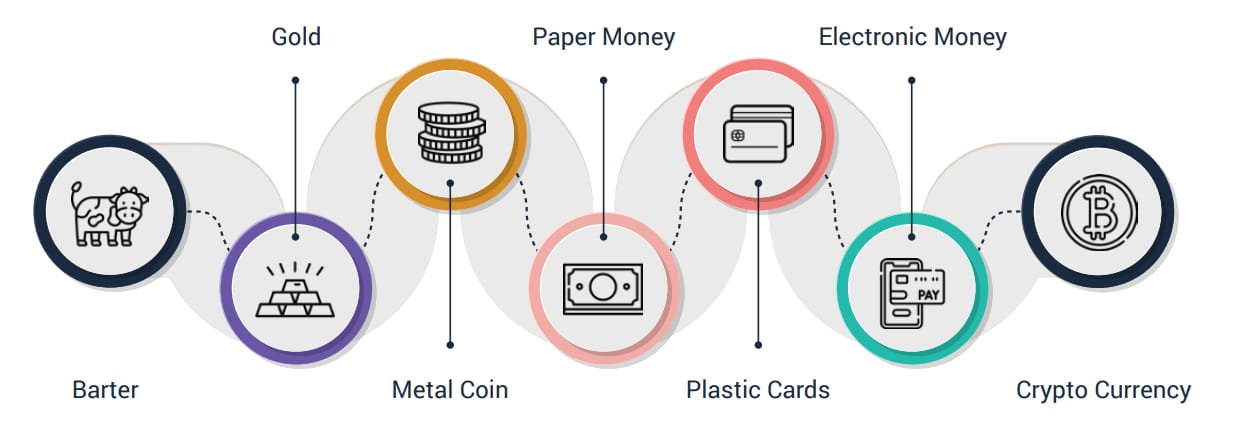
Traditional currencies such as dollars, euros, and rupees are issued within established financial systems. Banks and payment providers typically process transactions, maintain account records, and provide services for moving money.
Cryptocurrency can work differently. Depending on the network, transactions may be verified by distributed participants rather than one central authority. This creates a different financial model based on decentralization, cryptography, and programmable networks.
That does not mean cryptocurrency eliminates financial institutions entirely. People commonly use exchanges, payment providers, wallet applications, and other centralized services to interact with digital assets. Understanding this distinction is an important part of learning crypto for beginners.
Blockchain Technology
Blockchain is one of the most important concepts for anyone learning cryptocurrency. A blockchain is essentially a digital ledger maintained across a network. Transactions are grouped into blocks, and those blocks are connected in a chronological sequence.
Instead of having one database controlled by a single organization, many public blockchains distribute copies of transaction information across participating computers. Network rules determine how transactions are validated and added to the ledger.
Why Blockchain Matters
Blockchain technology provides a way to create a shared record without necessarily depending on one central database administrator. Cryptographic techniques help protect the integrity of transactions, while network consensus mechanisms determine how new information is accepted.
Different blockchains can use different technical designs. Some use proof of work, while others use proof of stake or other consensus approaches. These systems have different characteristics involving security, energy consumption, transaction processing, and network participation.
For someone studying crypto for beginners, it is useful to remember that cryptocurrency is an application of blockchain technology, but blockchain itself has potential uses beyond cryptocurrency.
Bitcoin and Its Role in Cryptocurrency
Bitcoin is the first widely recognized cryptocurrency and remains one of the most important digital assets in the industry. It was introduced through a 2008 white paper published under the name Satoshi Nakamoto and launched as a functioning network in 2009.
Bitcoin was designed as a peer-to-peer electronic payment system that could operate without requiring a central authority to approve every transaction. Its network uses blockchain technology to maintain a public transaction history.
Why Bitcoin Is Important for Beginners
Bitcoin is often the first cryptocurrency people encounter because it established many of the concepts that define the digital-asset industry. These include decentralized transactions, cryptographic ownership, blockchain-based records, and digital scarcity.
Learning how Bitcoin works can therefore provide a useful foundation for understanding other cryptocurrencies. At the same time, beginners should avoid assuming that every cryptocurrency operates exactly like Bitcoin. Different networks can have very different purposes and technical structures.
Ethereum and Smart Contracts
Ethereum expanded the possibilities of blockchain technology by supporting programmable smart contracts. A smart contract is software deployed on a blockchain that can execute predefined instructions when specified conditions are met.
Ethereum introduced a platform where developers can build decentralized applications rather than using blockchain only for transferring digital currency.
What Are Smart Contracts?
Smart contracts can be thought of as blockchain-based programs. Once deployed, their behavior follows the rules encoded into their software and the underlying network.
They are used in many areas of the cryptocurrency ecosystem, including decentralized finance, token creation, digital collectibles, and decentralized applications. However, smart contracts can contain programming errors, and transactions interacting with them may carry financial risks.
For crypto for beginners, the key idea is simple: Bitcoin primarily introduced decentralized digital money, while Ethereum helped popularize programmable blockchain applications.
Crypto Wallets Explained
A cryptocurrency wallet is a tool used to manage the cryptographic information associated with digital assets. Wallets can interact with blockchain networks and allow users to send, receive, and manage cryptocurrency.
There are several types of wallets, including software wallets, hardware wallets, and other custody arrangements.
Public Addresses and Private Keys
A public address can be shared with someone who wants to send cryptocurrency to you. It functions somewhat like an account destination for receiving digital assets.
A private key, by contrast, is highly sensitive. It is used to authorize transactions and demonstrate control over assets associated with a blockchain address. Anyone who obtains control of the relevant private credentials may potentially gain control over the assets.
Many modern wallets use a seed phrase, sometimes called a recovery phrase, to help restore wallet access. Protecting this information is one of the most important security responsibilities for cryptocurrency users.
Centralized and Decentralized Exchanges
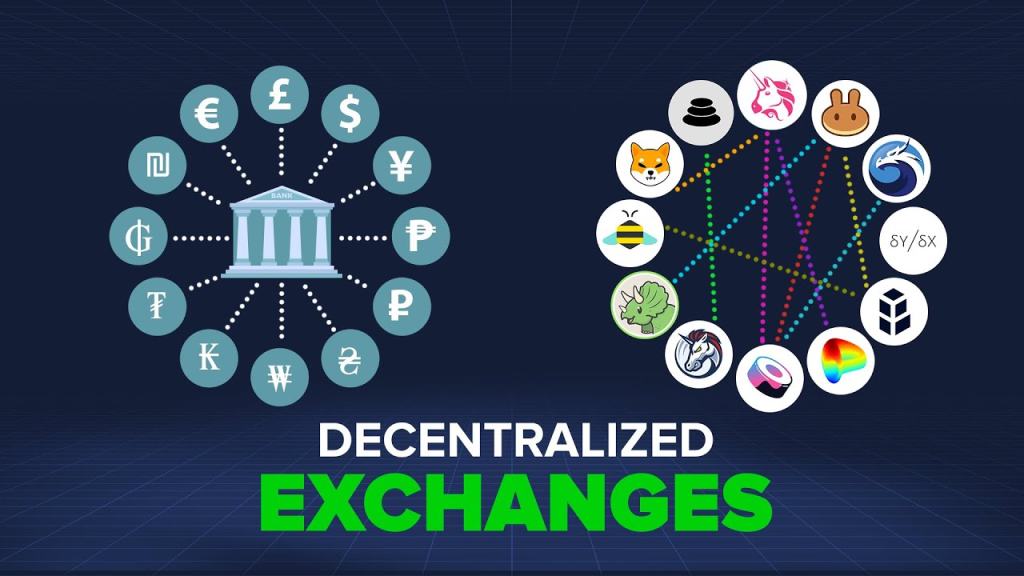
A cryptocurrency exchange is a platform where users can buy, sell, or trade digital assets. Exchanges generally fall into two broad categories: centralized exchanges and decentralized exchanges.
A centralized exchange, often called a CEX, is operated by a company that provides trading infrastructure and account services. Users generally create accounts and interact with the platform through a website or application.
A decentralized exchange, or DEX, uses blockchain-based smart contracts to facilitate trading without operating in exactly the same way as a traditional centralized platform.
Choosing an Exchange Carefully
Beginners should pay attention to factors such as security practices, available assets, fees, withdrawal policies, regulatory requirements, and the platform’s reputation.
An exchange account should not automatically be treated as equivalent to a personal wallet. The custody model can differ significantly, and users should understand who controls the private keys associated with their assets.
How Crypto Transactions Work
A cryptocurrency transaction generally involves transferring digital assets from one blockchain address to another. The transaction is digitally signed using the sender’s private credentials and then submitted to the relevant network.
Network participants verify the transaction according to the blockchain’s rules. If it satisfies those rules, it can eventually be included in the blockchain’s transaction history.
Crypto Transaction Fees
Many blockchain networks charge transaction fees. These fees compensate network participants or support the operation of the network, depending on its technical design.
Transaction costs can change depending on network activity. During periods of heavy demand, fees on some networks may increase. Beginners should therefore understand transaction fees before moving digital assets, especially when transferring relatively small amounts.
Understanding Crypto Prices and Volatility
Cryptocurrency prices can change significantly over relatively short periods. Market prices are influenced by supply and demand, investor sentiment, technological developments, regulations, macroeconomic conditions, liquidity, and other factors.
This volatility is one of the most important considerations in crypto for beginners.
Why Crypto Prices Change
Unlike a traditional savings account with a fixed balance, the market value of a cryptocurrency can fluctuate continuously while markets are operating. News about a blockchain project, changes in regulation, broader financial conditions, or shifts in market sentiment can affect prices.
A beginner should therefore distinguish between learning about cryptocurrency technology and speculating on cryptocurrency prices. Understanding the technology does not guarantee that an asset will increase in value.
Cryptocurrency Security for Beginners
Security should be a central part of any beginner’s crypto education. Digital assets can be attractive targets for phishing, scams, fraudulent websites, malicious software, and social-engineering attacks.
One of the most common mistakes is sharing sensitive wallet information. Legitimate services generally do not need a user’s private key or recovery phrase to “verify” ownership.
Protecting Your Crypto Account
Strong, unique passwords and multi-factor authentication can help protect exchange accounts. Users should also carefully verify website addresses, avoid suspicious links, and be cautious when receiving unsolicited messages about cryptocurrency opportunities.
A hardware wallet can provide another layer of protection for some users by keeping private keys in a specialized device. However, using any wallet still requires careful management of recovery information.
For crypto for beginners, the fundamental security rule is simple: treat private keys and recovery phrases as extremely sensitive information.
Common Types of Cryptocurrency
The cryptocurrency ecosystem includes several categories of digital assets. Bitcoin is often described as a decentralized digital currency, while Ethereum is a blockchain platform supporting smart contracts.
Other assets may include stablecoins, utility tokens, governance tokens, and tokens associated with decentralized applications.
What Are Stablecoins?
Stablecoins are digital assets designed to maintain a relatively stable value compared with a reference asset, commonly a fiat currency such as the U.S. dollar. They are widely used within cryptocurrency markets for trading, transfers, and decentralized applications.
However, “stable” does not mean completely risk-free. Different stablecoins use different mechanisms and reserves, and users should understand how a particular stablecoin is designed before relying on it.
Decentralized Finance Explained
Decentralized finance, commonly called DeFi, refers to financial applications built using blockchain networks and smart contracts. DeFi applications can provide services related to trading, lending, borrowing, and other financial activities.
Unlike conventional financial services, many DeFi applications allow users to interact directly with smart contracts through compatible wallets.
However, DeFi also introduces risks involving smart-contract vulnerabilities, market volatility, liquidity, platform design, and transaction fees. Beginners should learn how a protocol works before interacting with it.
Common Crypto Scams Beginners Should Know
Cryptocurrency scams can take many forms. Fraudsters may promise guaranteed profits, impersonate companies or influencers, create fake investment platforms, or send messages claiming that users need to transfer cryptocurrency to unlock an account.
A major warning sign is a promise of guaranteed or unusually high returns with little or no risk.
Why “Guaranteed Crypto Profits” Are a Red Flag
Legitimate financial markets involve uncertainty, and cryptocurrency markets can be particularly volatile. Anyone claiming to have a guaranteed method for generating large crypto profits should be approached with extreme caution.
Beginners should verify information independently rather than relying solely on social-media posts, private messages, or promotional claims.
Crypto Investing vs. Crypto Trading
Investing and trading are related but different activities. Crypto investing generally refers to acquiring assets with a longer-term perspective, while trading often involves shorter-term buying and selling based on market movements.
Neither approach removes market risk. Cryptocurrency prices can move unpredictably, and past performance does not establish future results.
For newcomers, education is more important than attempting to predict short-term market movements. Learning how blockchain networks work, understanding custody, researching projects, and recognizing scams can provide a stronger foundation than simply following online price predictions.
How Beginners Can Learn Cryptocurrency
The best way to approach crypto for beginners is to learn gradually. Start with fundamental concepts such as blockchain, Bitcoin, Ethereum, wallets, private keys, exchanges, transaction fees, and security.
After understanding those concepts, beginners can explore more advanced topics such as smart contracts, tokenomics, consensus mechanisms, decentralized applications, and DeFi.
It is also important to distinguish educational information from financial promotion. Cryptocurrency content on social media can be highly persuasive, but promotional claims may not provide enough context about risks.
Research Before Making Decisions
Research should involve understanding what a cryptocurrency is designed to do, how its network operates, who develops it, how tokens are distributed, and what risks are associated with the project.
Beginners should also check information from multiple reliable sources instead of making decisions based on a single post or video.
The Future of Cryptocurrency
The future of cryptocurrency remains an evolving subject. Blockchain networks continue to develop, while businesses, developers, financial institutions, regulators, and consumers explore different applications of digital assets.
Potential areas of development include faster payment systems, tokenized assets, decentralized applications, digital identity solutions, and blockchain-based financial infrastructure.
At the same time, challenges remain. These include scalability, security, regulatory uncertainty, user experience, privacy, and the environmental characteristics of different blockchain designs.
The long-term development of cryptocurrency will depend not only on technology but also on how networks address these practical challenges.
Final Thoughts on Crypto for Beginners
Learning crypto for beginners does not require becoming an expert overnight. The cryptocurrency industry contains many technical concepts, but the foundation can be understood step by step.
Start by understanding cryptocurrency and blockchain. Learn how Bitcoin and Ethereum differ, understand how wallets and private keys work, and become familiar with exchanges and transaction fees. Most importantly, learn about security and recognize that cryptocurrency markets involve significant uncertainty and risk.
Cryptocurrency is more than simply a collection of digital coins. It represents a broader technological ecosystem built around blockchain networks, cryptographic ownership, programmable applications, and decentralized systems. By developing a strong understanding of these fundamentals, beginners can navigate the subject more confidently and evaluate cryptocurrency information with greater care.
The most valuable lesson for anyone exploring crypto for beginners is that knowledge Crypto for Beginners should come before action. Understanding how digital assets work, how they are stored, how transactions are processed, and what risks exist creates a much stronger foundation for exploring the rapidly changing world of cryptocurrency.